
Arceuthobium cyanocarpum
Arceuthobium cyanocarpum
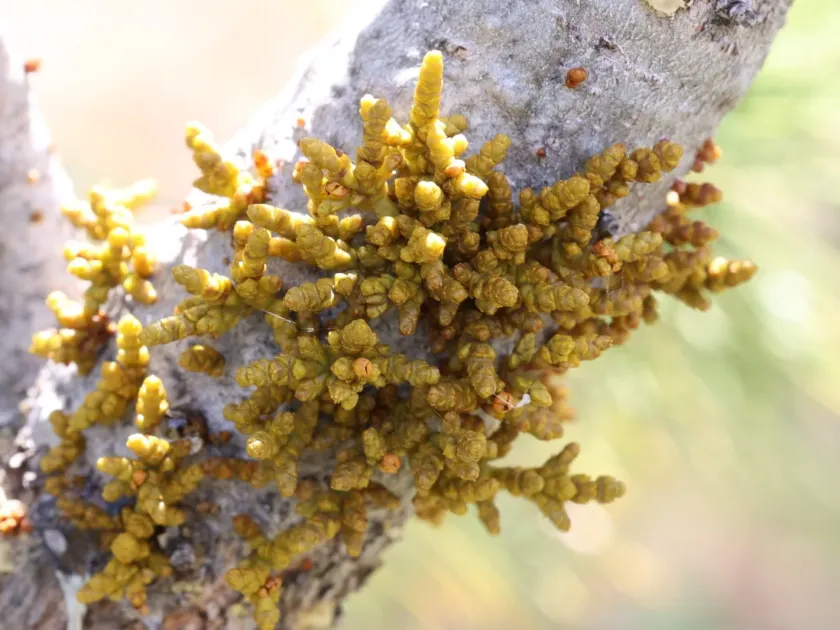
Description
Growing requirements
Arceuthobium cyanocarpum, commonly known as a type of dwarf mistletoe, belongs to the Santalaceae family. Unlike conventional crops, it is a parasitic plant that relies entirely on host trees within coniferous ecosystems for survival.
The plant is native to the western regions of North America, particularly mountainous areas. It thrives in high-elevation climates where specific conifer species, such as lodgepole pine, serve as its primary hosts for development.
Botanically, it is characterized by extremely reduced leaves and a structure that is optimized for attaching to branches. It uses a specialized root-like system, known as a haustorium, to penetrate the host tree and absorb necessary water and nutrients.
Environmental requirements for the species are strictly linked to its host. It requires a specific balance of light and humidity to support the germination of seeds, which are dispersed ballistically from the fruit to nearby branches.
The plant does not require soil cultivation or traditional agricultural inputs. Instead, its life cycle is synchronized with the physiological patterns of the host tree, allowing it to persist in the wild for many decades.
Main diseases and pests
The primary impact of Arceuthobium cyanocarpum is the physiological stress it places on host trees. By hijacking nutrients, the parasite causes significant growth stunting, loss of vigor, and reduced timber quality in infected pine stands.
One of the most notable symptoms of infection is the development of witches' brooms. These dense, abnormal clusters of branches alter the tree's silhouette and energy distribution, ultimately weakening the entire crown structure.
Severely infected trees become highly susceptible to secondary attacks from bark beetles and wood-decaying fungi. In forestry, these trees are often targeted for removal to prevent the further spread of the parasite to healthy stands.
Management strategies focus on silvicultural practices, including the removal of infected overstory trees and maintaining forest diversity. Such methods help to create physical barriers that limit the seed dispersal distance of the parasite.
Continuous monitoring is essential in forest management, as the cryptic nature of the early stages of infection makes it difficult to detect before significant damage to the forest stand is already established.