
Lodgepole pine dwarf mistletoe
Arceuthobium americanum
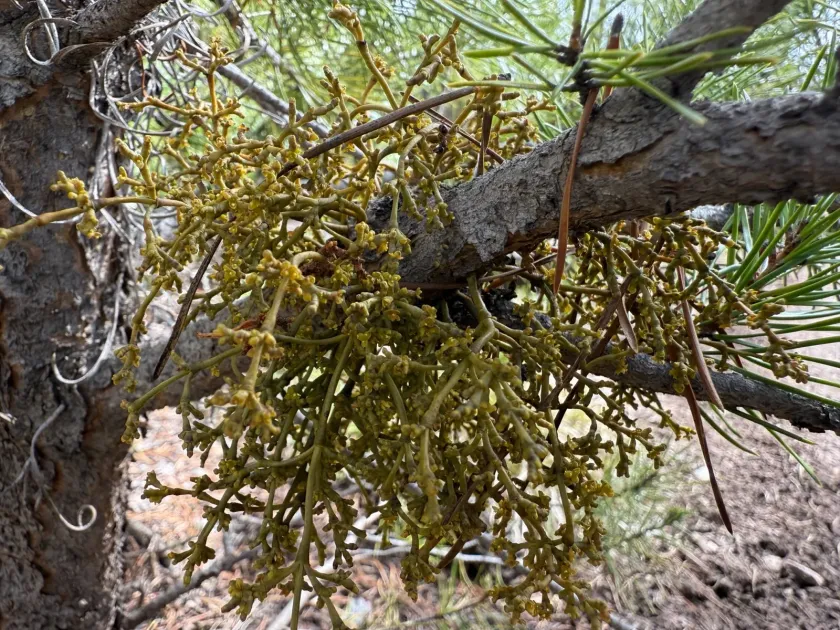
Description
Growing requirements
Arceuthobium americanum is a parasitic plant belonging to the Santalaceae family, widely known as the lodgepole pine dwarf mistletoe. It acts as a significant biotic factor in the forest ecosystems of North America, particularly where Pinus contorta grows.
This organism is an obligate parasite, lacking functional chlorophyll in its reproductive stages and relying entirely on the host tree for water and nutrient supply. It establishes an endophytic system that penetrates the host's vascular tissues.
The ecological requirements for this species are closely tied to its host. It flourishes in mature stands where the canopy architecture facilitates the explosive seed dispersal mechanism, which can eject seeds up to 15 meters.
Botanic characteristics include small, segmented shoots that emerge from the host's branches. These shoots bear flowers, and after pollination, they produce fruit which contains a single seed coated in a sticky substance, aiding its adhesion to new branches.
Silvicultural management is the primary approach to dealing with this parasite. It involves precise harvesting techniques that prioritize the removal of heavily infested trees and the thinning of stands to prevent contact between infected and healthy crowns.
Main diseases and pests
The primary damage caused by lodgepole pine dwarf mistletoe is the suppression of tree growth. Infested trees exhibit significantly reduced height and diameter growth, often failing to reach commercial maturity.
The formation of witches' brooms increases the weight of branches, making trees prone to breakage under heavy snow or wind. This structural weakness contributes to increased mortality within forest stands.
Infestation predisposes host trees to secondary pathogens, including wood-decay fungi and bark beetles. The combined pressure of the parasite and secondary pests often leads to rapid decline and death of the timber resources.
Management threats involve the difficulty of early detection. Since the endophytic system remains invisible inside the wood for several years, an entire stand can be compromised before symptoms become apparent to forestry inspectors.
Effective control measures require long-term planning and systematic forest sanitation. Implementing fuel-break zones and selective harvesting of infected clusters are crucial for maintaining the productivity and health of lodgepole pine forests.