
Apache dwarf mistletoe
Arceuthobium apachecum
Description
Growing requirements
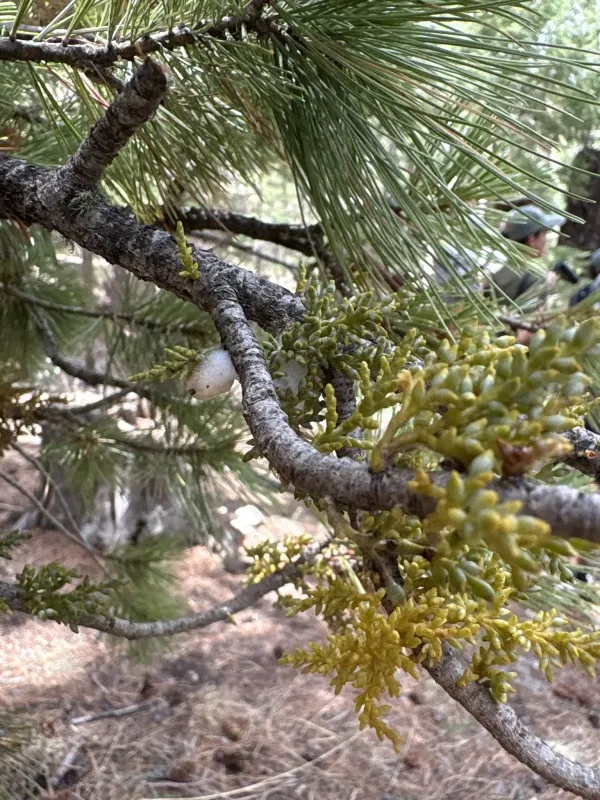
Apache dwarf mistletoe (Arceuthobium apachecum) is a specialized parasitic plant within the Santalaceae family, known for its significant impact on specific conifer hosts.
This species is native to the southwestern United States, primarily found in the forests of Arizona and New Mexico where it infects ponderosa pines.
Botanically, it is a reduced plant with minimal chlorophyll content, relying almost entirely on its host for water, carbohydrates, and mineral nutrients via haustoria.
The plant exhibits a unique reproductive strategy where it uses explosive discharge to disperse its sticky seeds onto the needles and branches of nearby host trees.
Its life cycle requires stable climatic conditions consistent with high-altitude coniferous forests, ensuring the successful germination of seeds on the host's bark.
Main diseases and pests
As a forest pathogen, it causes severe stress to its hosts, leading to reduced growth rates and significantly lower timber quality in commercial stands.
The parasitic activity induces the formation of dense branch clusters known as witches' brooms, which drastically alter the physiology of the pine tree.
Heavy infestations can lead to premature mortality, especially in drought-stressed forest environments where host resilience is already compromised.
Management strategies focus on silvicultural practices, including the removal of infected trees to create buffer zones that limit the spread of seeds.
Ongoing monitoring is essential for land managers to maintain the long-term health of forests and mitigate the economic losses associated with dwarf mistletoe infestations.