
Arceuthobium minutissimum
Arceuthobium minutissimum
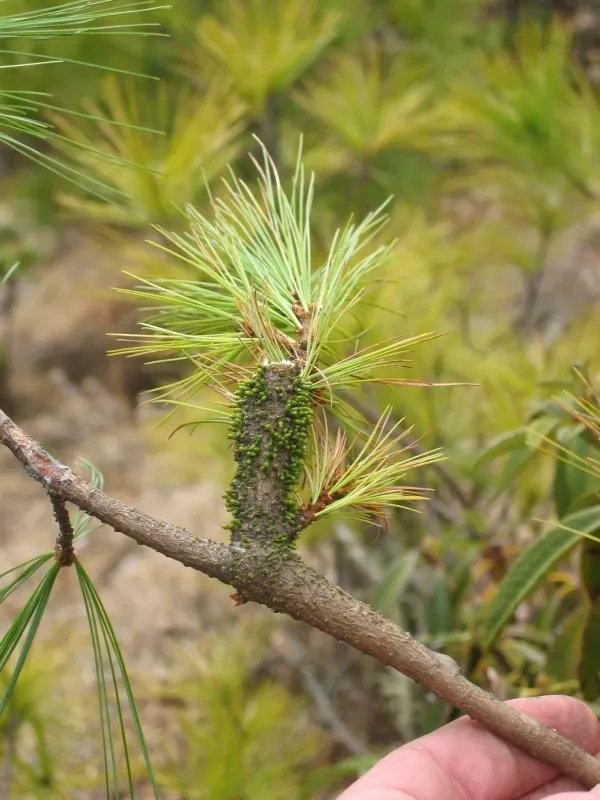
Description
Growing requirements
Arceuthobium minutissimum, commonly known as a type of dwarf mistletoe, belongs to the Santalaceae family. It is a highly specialized parasitic plant that lacks true leaves and relies entirely on host trees for nutrients and water.
The native distribution of this species is primarily focused on the high-altitude forests of the Himalayas. It specifically targets various pine species, forming an intimate connection with the host's vascular system.
Botanically, it is one of the smallest vascular plants in the world. Its structure is largely endophytical, consisting of a network of root-like filaments that penetrate deep into the woody tissues of the host pine tree.
Climate requirements for its survival are strictly tied to sub-alpine coniferous habitats. The plant thrives in environments that provide consistent moisture, which is essential for the germination and attachment of its seeds to host branches.
From an agronomic or forestry perspective, this plant is categorized as a destructive pathogen. There is no commercial cultivation of this species, as it represents a significant risk to timber and forest health.
Main diseases and pests
The primary threat posed by Arceuthobium minutissimum is its ability to induce physiological decline in its host. The parasitic infection often results in the formation of dense, abnormal branch growth known as witches' brooms.
The parasite competes for nutrients and water, severely stressing the host tree. This depletion of resources reduces the tree's vigor, makes it prone to secondary pest infestations, and eventually shortens its lifespan.
The reproduction cycle relies on explosive seed dispersal. These sticky seeds can travel significant distances in the wind, attaching themselves to needles or bark of healthy hosts to begin a new infection cycle.
Forest management strategies focus on sanitation and early detection. Infected branches must be pruned and removed from the forest floor to prevent the spread of viable seeds to healthy portions of the stand.
Managing this parasite requires ongoing monitoring of forest stands. In areas with high incidence of infection, thinning practices and the removal of heavily infested trees are necessary to maintain ecosystem productivity.