
Dwarf mistletoe (Arceuthobium microcarpum)
Arceuthobium microcarpum
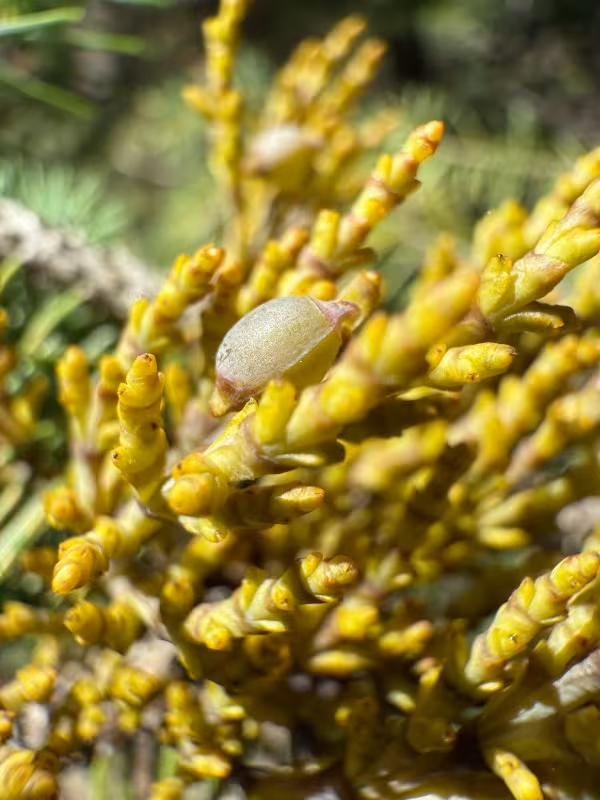
Description
Growing requirements
Arceuthobium microcarpum, commonly known as a type of dwarf mistletoe, belongs to the Santalaceae family. It is an obligate hemiparasitic plant that thrives on specific conifer species, particularly Engelmann spruce, in North American mountain regions.
As a parasite, it does not rely on soil for nutrients but extracts water, minerals, and photosynthetic products directly from the xylem and phloem of its host. This specialization makes it a significant biological factor in forest dynamics.
The plant has a highly reduced vegetative structure, consisting mostly of small stems that emerge from the bark of the infected tree. Its life cycle is perfectly adapted to the environmental conditions of subalpine coniferous zones.
There are no specific agricultural soil requirements for its cultivation, as it does not grow in the ground. Instead, the survival of the species depends on the density and age structure of the host forest stands.
Climate plays a critical role, as the seed dispersal mechanism requires precise moisture levels to successfully attach to new host branches and initiate the infection process through specialized haustoria.
Main diseases and pests
Arceuthobium microcarpum poses a severe threat to timber production and forest ecology by causing slow but steady decline in the health of infected spruce trees.
The most recognizable symptom is the formation of dense, abnormal branch growths known as «witches' brooms», which draw significant energy away from the host tree.
Infection leads to reduced wood quality, diminished growth rates, and an increased susceptibility to secondary forest pests, including various species of bark beetles.
In forest management, infected stands often require targeted harvesting to prevent the spread of mistletoe seeds to healthy neighboring trees and to maintain forest vigor.
Controlling this parasite remains challenging, as there are no chemical pesticides that can eliminate the parasite without damaging the host or the surrounding forest ecosystem.