
Juniper mistletoe
Arceuthobium juniperi-procerae
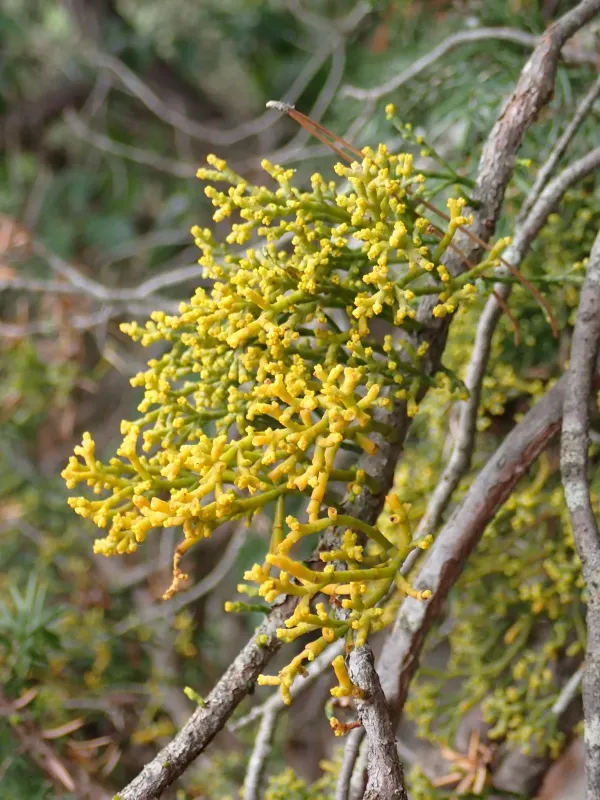
Description
Growing requirements
Arceuthobium juniperi-procerae is a dwarf mistletoe species belonging to the Santalaceae family. Unlike conventional agricultural crops, this plant is an obligate parasite that imposes a significant ecological and economic burden on specific forest ecosystems, particularly juniper stands.
The origin of this species is associated with the mountainous regions of East Africa. It is specialized to parasitize Juniperus procera, utilizing the tree's vascular system to extract water, mineral nutrients, and carbohydrates necessary for its survival and reproductive cycle.
Botanically, the plant exhibits extreme reduction of its vegetative organs. The visible part consists of small, scale-like structures, while the primary physiological and reproductive activities occur through a complex system of endophytes embedded within the host's branch tissues.
Environmental requirements for the species include cool, humid conditions often found in high-altitude forests. These conditions support the survival of the seeds after they are forcibly ejected from the berries and facilitate their adhesion to the host's bark.
From an agronomic perspective, no cultivation techniques exist for this species. Management is strictly focused on phytosanitary control to prevent the spread of the parasite in regions where juniper trees are valuable for conservation or timber production.
Main diseases and pests
The primary threat posed by this parasite is the induction of abnormal growth patterns, such as witches' brooms, which distort branch architecture. These structures act as nutrient sinks, diverting resources away from the tree's vital functions.
Infected trees suffer from reduced vigor, stunted growth, and a compromised vascular system. This predisposes the host to secondary infestations by bark beetles and various fungal pathogens, significantly increasing mortality rates in infested stands.
Control strategies are challenging because the parasite is internal to the host. Management programs typically prioritize early detection, removal of heavily infested limbs, and in severe cases, the selective removal of entire infected trees to protect surrounding individuals.
Monitoring efforts should target periods when the parasite's berries are ripe, as this is when the seeds are most likely to disperse. Maintaining tree health through proper stand management and preventing physiological stress can reduce the host's susceptibility.
The long-term impact on forest health is severe. Without active management, the parasite can lead to the total collapse of juniper forests in localized areas, reducing biodiversity and ecosystem services provided by the affected vegetation.