
Arceuthobium gillii
Arceuthobium gillii
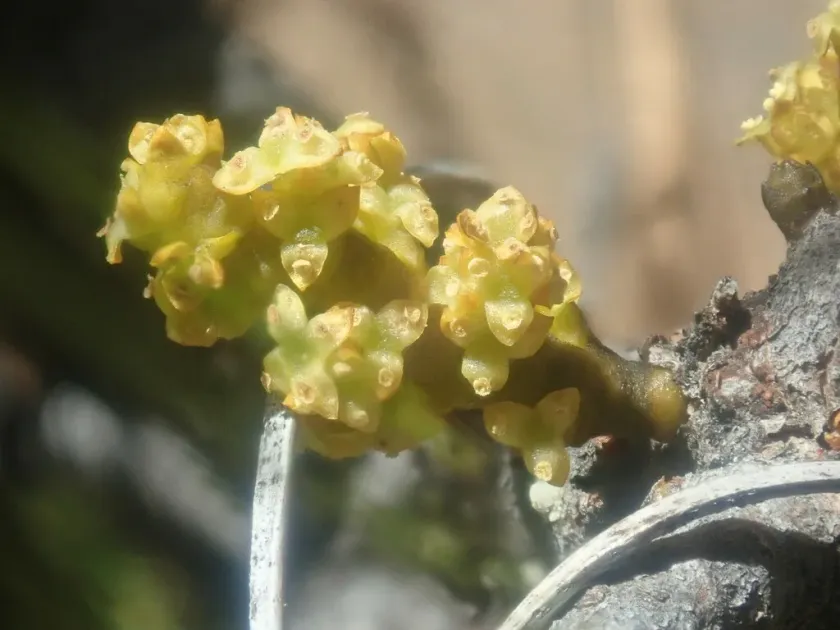
Description
Growing requirements
Arceuthobium gillii is a member of the Santalaceae family, known as a type of dwarf mistletoe. It is not an agricultural crop but rather a specialized botanical parasite that targets specific coniferous species, particularly within the pine genus.
This plant lacks the ability to produce its own food through photosynthesis as it is devoid of significant chlorophyll. It relies entirely on the host tree, utilizing specialized structures called haustoria to tap into the host's xylem and phloem for nutrient extraction.
The geographic distribution of Arceuthobium gillii is primarily found in the mountainous regions of Mexico and the southern United States. It flourishes in climatic zones that provide the necessary host trees and specific environmental cues for its reproductive cycle.
Environmental requirements for the parasite are linked to the presence of host density. Its reproductive mechanism involves explosive seed dispersal, which requires proximity between branches of host trees to effectively establish new sites of infection within a forest stand.
Soil and light requirements are secondary for this parasite, as it resides entirely upon the host. Its survival depends on the host tree's ability to maintain a sufficient level of vigor to provide the nutrients required for the parasite to bloom and mature.
Main diseases and pests
The primary threat posed by Arceuthobium gillii is the significant degradation of host trees. Persistent parasitism weakens the host, leads to reduced growth rates, causes branch deformation, and increases the tree's susceptibility to drought, bark beetles, and fungal infections.
A classic diagnostic symptom of an infestation is the development of witches' brooms, which are dense clusters of abnormally growing branches. These clusters are metabolically expensive for the host and serve as major sinks for nutrients, further starving the rest of the tree.
Management strategies for this parasite focus on silvicultural practices. This includes the removal of heavily infested trees during timber harvests and maintaining diverse forest structures to hinder the spread of seeds from one host to another.
Biotic threats include the potential for rapid spread in monoculture forests, where high host density facilitates efficient seed dispersal. Monitoring and early detection are essential to prevent the parasite from becoming endemic in a particular forest area.
- Regular forest health monitoring and aerial surveys.
- Sanitation harvesting of heavily infected trees.
- Promotion of mixed-species forest stands.
- Quarantine protocols for infected forest areas.