
Douglas fir dwarf mistletoe
Arceuthobium douglasii
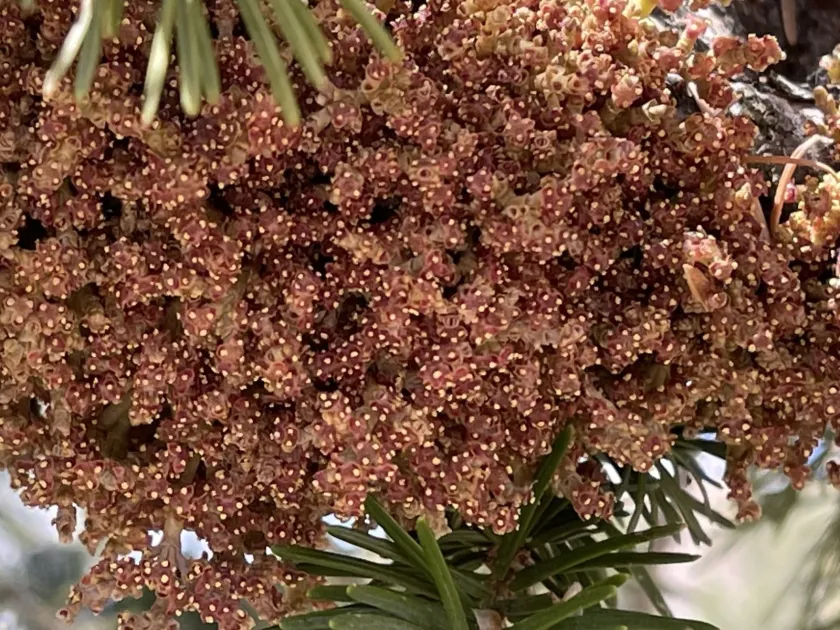
Description
Growing requirements
Douglas fir dwarf mistletoe (Arceuthobium douglasii) is a parasitic shrub belonging to the Santalaceae family. Unlike traditional crops, it is not cultivated; instead, it is a significant forest pathogen that infests Pseudotsuga menziesii and other coniferous trees.
The plant is native to the western regions of North America, where it thrives in cool, mountainous forest environments. Being an obligate parasite, it lacks sufficient chlorophyll and relies entirely on the host tree's xylem to obtain water and essential nutrients for its survival and reproduction.
There are no specific agronomic requirements for this species, as it is considered a pest. Its life cycle is perfectly adapted to the phenology of its host, utilizing high-pressure mechanisms to forcibly eject its seeds, which can land on susceptible branches of nearby trees.
Botanically, it presents as a small, jointed plant with scale-like leaves. Its internal structure consists of a complex root system (haustoria) that penetrates the host's bark and integrates directly into its vascular cambium, effectively siphoning off resources for many years.
From an economic perspective, Arceuthobium douglasii is detrimental. It is a major factor in forest growth reduction and wood degradation. Its presence is typically associated with significant financial losses in the forestry sector due to lowered timber quality and increased mortality of stands.
Main diseases and pests
The primary threat posed by this parasite is the physical and physiological depletion of the host tree. By diverting vital nutrients, the dwarf mistletoe causes stunted growth, canopy deformation, and the characteristic proliferation of branches known as witches' brooms.
Infested trees show increased vulnerability to secondary invaders. Weakened physiological defenses allow wood-boring beetles and pathogenic fungi to attack the tree, which can lead to the rapid decline and death of large forest sections if left unmanaged.
Management strategies focus on silvicultural control. This includes the removal of heavily infected trees and the implementation of sanitation harvests to prevent the spread of mistletoe seeds into younger, susceptible stands.
Monitoring efforts involve regular forest health surveys. Foresters use specialized techniques to inspect crowns for signs of mistletoe shoots, ensuring that infections are identified early before they can escalate into a wider outbreak.
In summary, Douglas fir dwarf mistletoe represents a significant challenge for sustainable forest management. Preventing its spread is crucial to maintaining the health, productivity, and economic viability of Douglas fir plantations across North America.