
Piñon dwarf mistletoe
Arceuthobium divaricatum
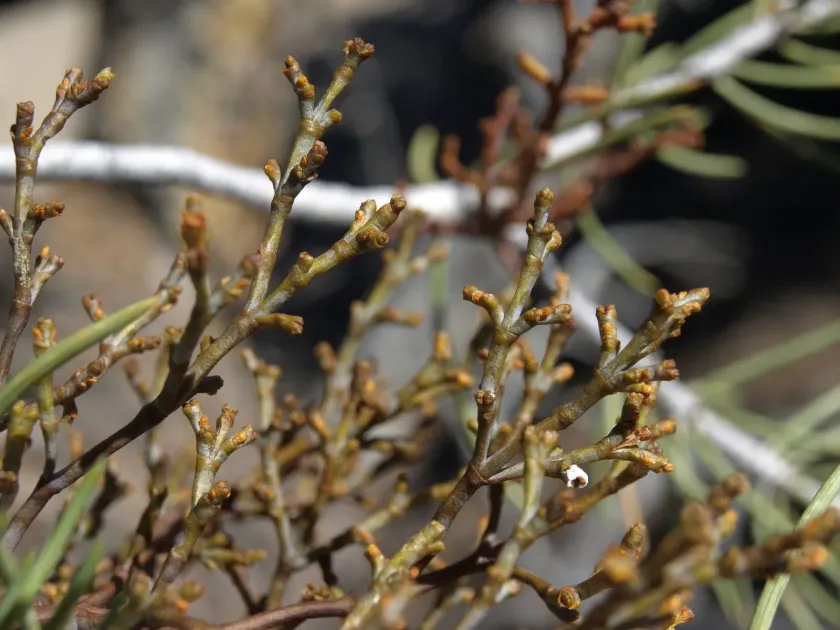
Description
Growing requirements
Arceuthobium divaricatum, commonly known as the piñon dwarf mistletoe, is a parasitic plant belonging to the Santalaceae family.
Unlike cultivated agricultural crops, this species is considered a forest pest that relies entirely on host trees, specifically pine species, for survival.
The plant originates from the arid and semi-arid coniferous forests of North America, where it has evolved to tap into the vascular systems of its hosts.
Environmental requirements are strictly tied to the host's physiological state, as the mistletoe requires a consistent supply of water and nutrients harvested from the pine tree.
It lacks significant chlorophyll-based photosynthesis, making it an obligate parasite that dictates a high-stress lifestyle for the infected host plant.
Main diseases and pests
The primary threat posed by this species is the severe reduction in tree vigor, which often culminates in premature tree death and forest decline.
Infection results in the formation of witches' brooms, which are abnormal dense clusters of branches that redirect energy and nutrients away from productive growth.
Management strategies involve rigorous silvicultural practices, such as removing infected trees or clear-cutting affected patches to prevent further spread of the parasite.
Biological factors like wind-dispersed seeds allow the mistletoe to colonize adjacent trees rapidly, necessitating constant field monitoring by forestry experts.
No chemical pesticides are currently recognized as effective for eliminating established infections without causing collateral damage to the host trees and surrounding ecosystem.