
Aponogeton ulvaceus
Aponogeton ulvaceus
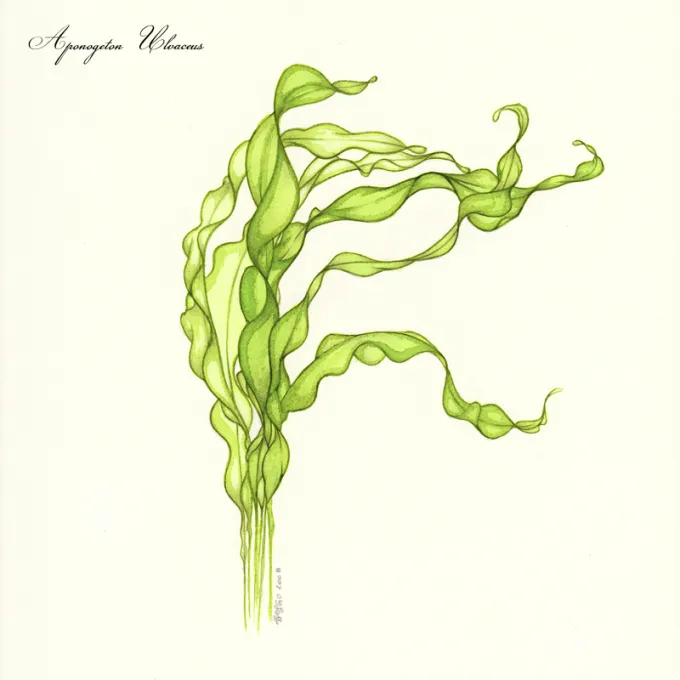
Description
Growing requirements
Aponogeton ulvaceus is a magnificent aquatic plant belonging to the Aponogetonaceae family. Native to Madagascar, it thrives in running water environments, making it a highly prized specimen for large, well-maintained aquaria.
The culture requires water temperatures ranging from 20°C to 28°C. Providing a stable environment is crucial, as the plant is sensitive to significant changes in water parameters, including pH and total hardness.
A nutrient-rich substrate is essential for the development of its large, wavy leaves. Using root tabs or enriched soil provides the necessary macro and micronutrients that support a healthy root tuber system.
Moderate to high lighting is recommended to maintain the plant's characteristic appearance. A light duration of 10 to 12 hours daily promotes robust growth and helps the plant produce its attractive inflorescences.
Water movement is a fundamental requirement for this species. In its natural habitat, it is accustomed to water currents, so providing adequate filtration flow ensures oxygenation and helps clear debris from the delicate foliage.
Main diseases and pests
The most significant threat to this species is the instability of environmental conditions. Sudden temperature fluctuations often trigger an immediate shedding of leaves, leading to an unwanted dormancy period.
Algae infestations, particularly filamentous algae, can easily overwhelm the plant if the nutrient balance in the water column is not strictly managed. This competition deprives the Aponogeton of essential minerals.
Bacterial or fungal rot of the bulb occurs primarily when the substrate is too compact and anaerobic. Proper substrate aeration is necessary to ensure the health of the tuber, which stores the plant's energy.
Poor lighting leads to etiolation, where the plant grows weak and leggy. This weakened state makes it susceptible to various pathogens and significantly lowers its aesthetic and biological vitality.
Excessive herbivorous activity by certain snail species or fish can cause physical damage to the leaves. Monitoring the aquarium fauna is necessary to ensure that the plant maintains its structural integrity and health.