
Aponogeton junceus
Aponogeton junceus
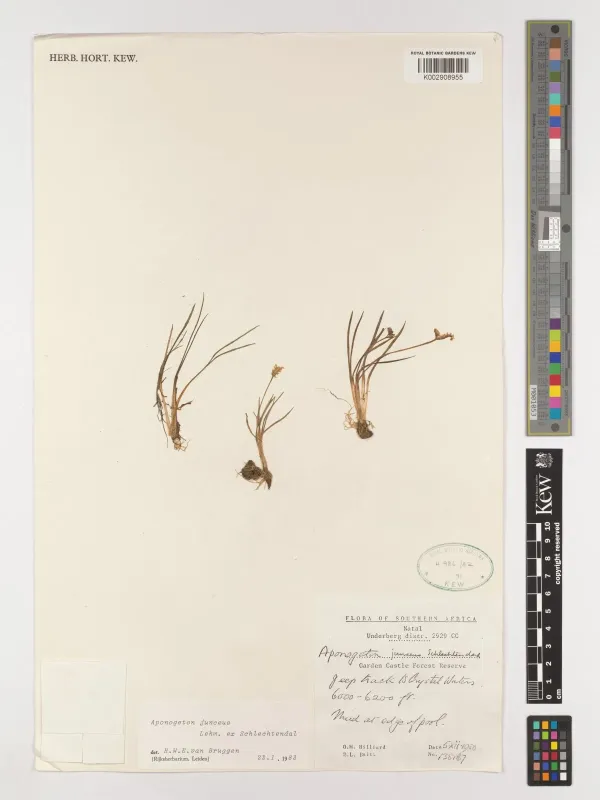
Description
Growing requirements
Aponogeton junceus is a perennial aquatic plant belonging to the Aponogetonaceae family. Native to the tropical regions of Southern Africa, it is primarily found in seasonal pools and marshes where it adapts to varying water levels throughout the year.
Botanically, the plant is characterized by its slender, rush-like leaves that arise from a small, sturdy tuber. This morphology is an evolutionary adaptation to shallow water environments, allowing the plant to minimize water resistance and maximize light absorption.
Cultivation requires specific environmental conditions, including stable water temperatures between 22 and 27 degrees Celsius. It thrives in soft, slightly acidic water and requires bright, indirect lighting to prevent the degradation of the foliage during the growing season.
The growing medium must be nutrient-rich, typically comprising a mixture of clay-based soil and fine peat. Adequate aeration of the substrate is critical, as stagnant conditions can lead to the rapid onset of tuber rot and the eventual loss of the plant.
The plant is primarily utilized in the ornamental horticultural industry, specifically for high-end aquascaping and botanic garden displays. Its elegant, minimalist appearance makes it a sought-after specimen for specialized collections that mimic tropical wetland habitats.
Main diseases and pests
The primary threats to this culture are fungal pathogens such as Pythium species, which target the root system in poorly managed substrates. Maintaining water quality and proper flow velocity is the best strategy for disease prevention.
Herbivorous aquatic pests, particularly certain species of freshwater snails, can cause significant damage to the plant's delicate tissues. Integrated pest management, focusing on manual removal and environmental control, is recommended for maintaining plant health.