
Aponogeton boivinianus
Aponogeton boivinianus
Description
Sowing dates
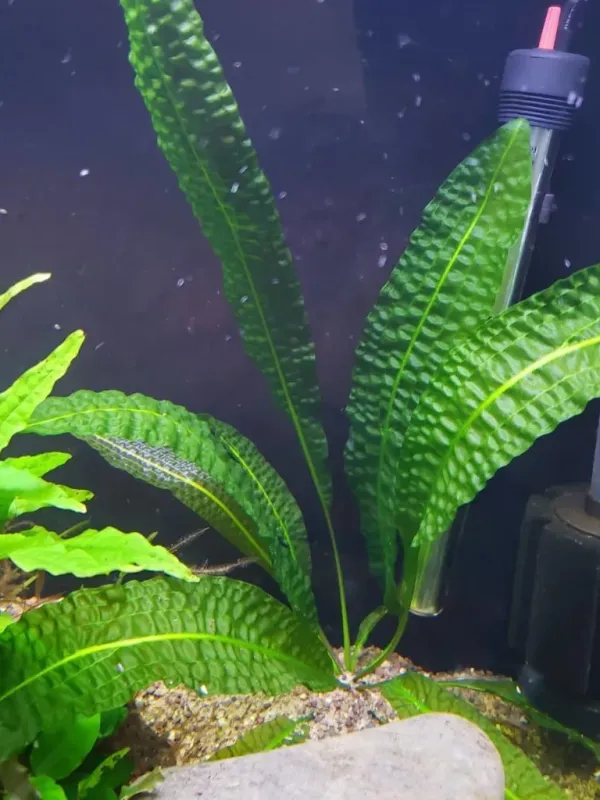
Aponogeton boivinianus is a remarkable aquatic plant belonging to the Aponogetonaceae family. It is endemic to Madagascar, naturally inhabiting fast-flowing rivers and shaded forest streams.
In cultivation, propagation is primarily achieved through the division of the tuber or by germinating seeds. Planting requires significant care to ensure the tuber is not buried too deep in the substrate.
The plant is distinguished by its large, bullate (puckered) leaves that can reach substantial lengths. It stores energy in a sturdy bulb, which allows it to survive seasonal environmental shifts.
A nutrient-rich substrate is essential for the healthy growth of this species. The root system is quite extensive and benefits from the addition of slow-release mineral fertilizers buried beneath the root zone.
Success with this crop depends on understanding its natural life cycle. It often undergoes a period of dormancy, during which it may lose its leaves, requiring the grower to maintain stable conditions until regrowth begins.
Growing requirements
To thrive, Aponogeton boivinianus requires water temperatures between 22°C and 26°C. It is highly sensitive to rapid fluctuations, which can cause the plant to stress and drop its leaves.
Water chemistry should lean towards soft to medium hardness, with a pH level kept between 6.0 and 7.5. Consistent water quality is vital to prevent leaf damage and melting.
The species demands a steady, moderate current. In stagnant water, the plant fails to thrive and is highly susceptible to decay, as the current ensures a constant supply of nutrients to the leaves.
Intense, full-spectrum lighting is necessary, though it must be carefully managed. High light levels should be coupled with CO2 supplementation to maximize the rate of photosynthesis.
Maintaining a clean substrate is also key. The accumulation of organic detritus can introduce harmful bacteria that attack the bulb, so regular maintenance of the bottom layer is required.
Main diseases and pests
The most significant threat is tuber rot, often caused by inappropriate water parameters or the absence of a proper dormancy phase. Once the tuber begins to decay, the plant is difficult to save.
Pests such as certain types of aquatic snails can feed on the leaves, causing ragged edges and introducing pathogens into the leaf tissue that trigger localized necrosis.
Iron deficiency is a common issue that manifests as chlorosis. Without adequate iron, the leaves become pale, translucent, and increasingly brittle, eventually leading to structural collapse.
Excessive algae growth, particularly blue-green algae, is a dangerous competitor. It quickly smothers the leaves, depriving the plant of the light needed to sustain its large foliage.
Inconsistent nutrient levels in the water column can trigger sudden leaf loss. Growers must monitor nitrogen and phosphate levels strictly to prevent the plant from shedding its healthy, mature growth.