
Aponogeton madagascariensis
Aponogeton madagascariensis
Description
Growing requirements
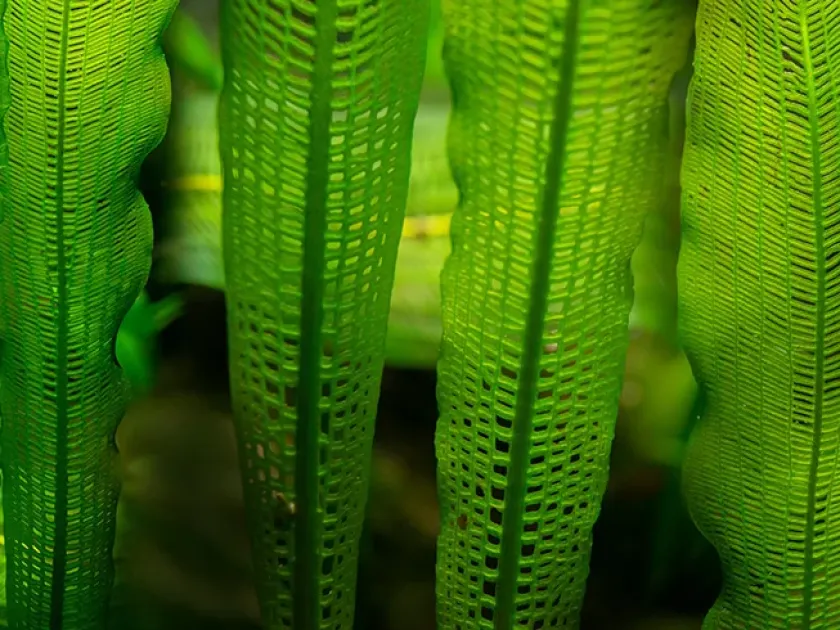
Aponogeton madagascariensis, commonly known as the Madagascar lace plant, belongs to the Aponogetonaceae family. It is a highly decorative aquatic plant renowned for its unique skeletal, lattice-like foliage.
Originating from the rivers and streams of Madagascar, this species thrives in clear, flowing water. It is adapted to environments with moderate light levels, often found in nature under the canopy of tropical riparian zones.
In aquaculture, the plant requires cool to moderate temperatures ranging from 18 to 24 degrees Celsius. Providing good water circulation is essential to mimic its natural habitat and ensure the leaves remain clean of debris.
The substrate should be nutrient-rich and porous, allowing the tuber to establish a strong root system. It is advisable to use high-quality aquatic substrates supplemented with root tabs to support vigorous growth.
Understanding the dormancy period is crucial for long-term success. The plant naturally undergoes a cycle of active growth followed by rest, where it may shed its leaves; during this time, the tuber must be kept in favorable conditions to resprout.
Main diseases and pests
The most significant threat to the Madagascar lace plant is the accumulation of algae on its delicate, webbed leaves. If not managed, biofilm and algae growth will quickly inhibit light absorption and suffocate the plant.
Poor water quality and lack of oxygenation can also cause the tuber to decay. Ensuring that the substrate does not become anaerobic is vital for maintaining the health of the bulb and preventing systemic fungal or bacterial infections.