
Anthurium magnificum
Anthurium magnificum Linden
Description
Growing requirements
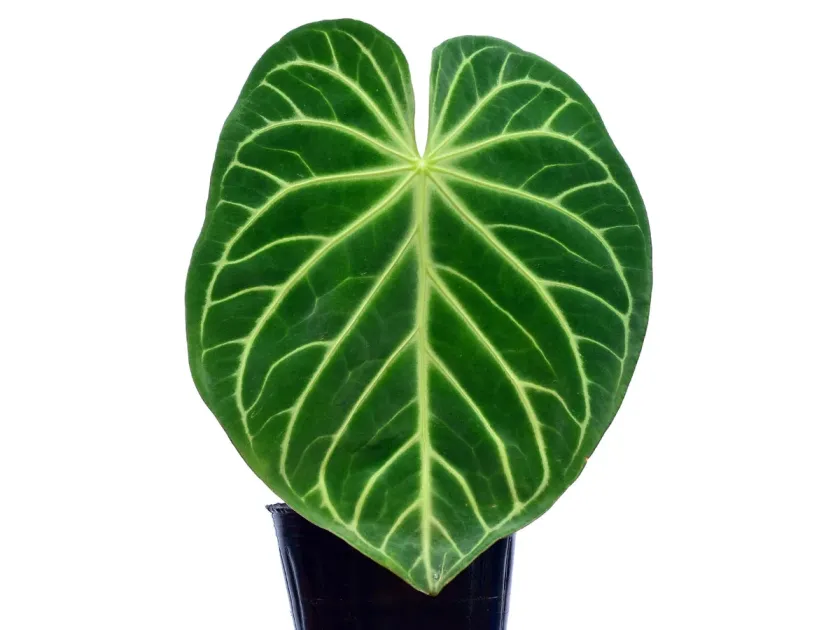
Anthurium magnificum, a member of the Araceae family, is a highly prized decorative plant native to the tropical rainforests of Colombia. It is renowned for its large, heart-shaped, velvety leaves featuring prominent, light-colored, cream-white veins.
The culture thrives in temperatures ranging from 20 to 25 degrees Celsius. It is highly sensitive to cold drafts and significant temperature fluctuations, which can negatively impact its physiological processes and leaf appearance.
Humidity requirements for this species are strict, ideally maintained between 70% and 80%. High humidity is essential to prevent the leaf margins from browning and to ensure the plant maintains its vibrant, lush appearance throughout the year.
The potting medium must be chunky, well-draining, and slightly acidic. A mix of orchid bark, perlite, coco coir, and activated charcoal is ideal, as it mimics the epiphyte-friendly environment found in the plant's natural habitat.
Bright, indirect light is necessary for healthy growth. While it tolerates lower light levels, excessive shade will cause the plant to become leggy and lose its unique leaf color intensity. Avoiding direct noon sun is crucial to prevent foliage burns.
Main diseases and pests
Root rot is the most common condition affecting Anthurium magnificum, typically caused by overwatering or using a substrate with poor drainage. It is characterized by blackened roots and soft, mushy stalks that can kill the plant quickly.
Pests such as spider mites and mealybugs are frequently encountered in domestic environments, especially when indoor humidity levels drop too low. These insects damage the velvet surface of the leaves, leading to stunted development.
Preventative care includes regular inspection of the leaf undersides and maintaining optimal environmental conditions. If an infestation occurs, insecticidal soaps or neem oil are effective treatments for managing pest populations.
Fungal leaf spots can develop if the environment lacks sufficient air circulation. Improving ventilation around the foliage helps to mitigate this risk and keeps the plant's surface free from excess moisture buildup.
Implementing a routine of moderate irrigation and seasonal monitoring ensures the long-term vitality of the culture, allowing for consistent growth and the production of new, healthy foliage.