
Anthurium crystallinum
Anthurium crystallinum Linden & André
Description
Growing requirements
Anthurium crystallinum, commonly known as the Crystal Anthurium, is a striking ornamental plant belonging to the Araceae family. This species originates from the tropical rainforests of Central and South America, particularly in regions of Panama, Colombia, and Peru.
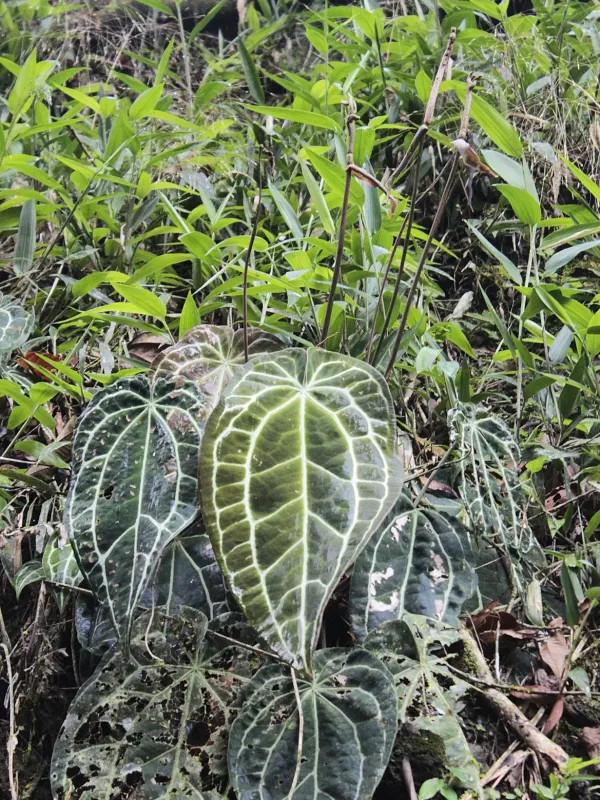
Botanically, it is characterized by large, heart-shaped, velvety leaves with prominent, shimmering white or silver veins. These foliage features make it a highly sought-after specimen among botanical collectors and indoor garden enthusiasts.
To ensure optimal growth, the culture requires a warm, humid environment with temperatures consistently between 20°C and 26°C. It is sensitive to cold drafts and rapid fluctuations in ambient temperature, which can stress the plant's root system.
Soil requirements involve a highly porous, well-draining substrate. A mix consisting of orchid bark, perlite, peat moss, and charcoal is recommended to provide sufficient aeration and prevent the root zone from becoming waterlogged.
The agricultural management of this plant focuses on moderate fertilization during the growing season and maintaining high ambient humidity, often necessitating the use of humidifiers or greenhouse environments to prevent leaf browning.
Main diseases and pests
Root rot is the most common physiological threat to Anthurium crystallinum, usually triggered by excessive watering and the use of heavy, non-draining soil mixtures that lead to oxygen deficiency in the roots.
Spider mites are the most persistent pest threat, especially in indoor environments where humidity levels are insufficient. They thrive under dry conditions and can cause significant damage to the delicate velvet leaf texture.
Mealybugs and scale insects may also settle on the plant, hiding in the petioles and leaf crevices. These pests can be effectively managed with systemic insecticides or manual removal using cotton swabs dipped in alcohol.
Fungal leaf spot diseases may develop if water remains on the leaves for extended periods in low-light conditions. Ensuring proper air circulation around the plant is critical to mitigating these risks.
Regular sanitation, such as removing old or decaying foliage and ensuring clean tools, is vital to prevent the spread of pathogens throughout the cultivation area.