
Anthurium bakeri
Anthurium bakeri Hook. f.
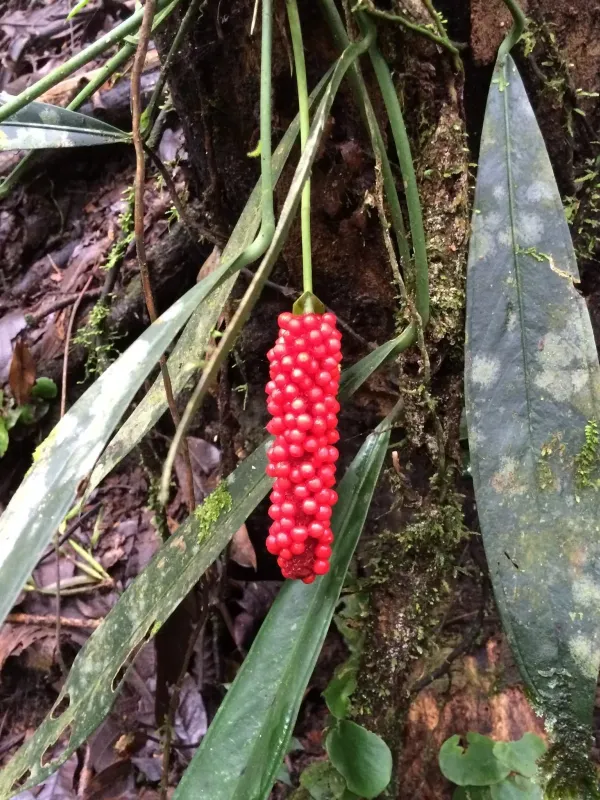
Description
Growing requirements
Anthurium bakeri is a distinct epiphytic species belonging to the Araceae family. Native to the rainforests of Central America, specifically Costa Rica and Panama, this plant naturally thrives in the humid, shaded environments of the forest canopy.
Cultivation requirements for this species focus on simulating its tropical habitat. It prefers bright, indirect light conditions. Exposure to direct afternoon sun can lead to leaf scorch, damaging the foliage and compromising the aesthetic quality of the plant.
The ideal potting medium should be porous and rich in organic matter. A well-draining mix composed of orchid bark, perlite, sphagnum moss, and high-quality peat is recommended to provide both aeration and moisture retention for the root system.
Temperature management is critical for the healthy development of Anthurium bakeri. It thrives in temperatures between 20°C and 26°C. It is essential to avoid cold drafts and significant temperature drops, which can cause leaf drop and stress the plant.
This species is characterized by long, lance-shaped, leathery leaves and an inflorescence that develops into striking red berries. These berries are a key ornamental feature and, under proper conditions, remain on the plant for an extended period.
Main diseases and pests
Common pests affecting Anthurium bakeri include spider mites, mealybugs, and scale insects. These pests often congregate on the underside of the leaves or along the stem, feeding on plant sap and causing yellowing or distorted growth.
Fungal diseases represent a significant threat to the plant's health, particularly root rot caused by overwatering or compacted soil. When the roots lack oxygen, they become susceptible to pathogens that destroy the plant from within.
Management of these threats involves a proactive approach to plant hygiene. Regular inspection of foliage, maintaining appropriate humidity levels, and ensuring proper airflow are effective methods for preventing pest infestations and fungal growth.
When pests are detected, the use of neem oil or insecticidal soap is generally effective for mild infestations. For more severe cases, systemic insecticides may be necessary to ensure the eradication of the pest population.
Treatment for fungal infections includes removing affected areas and repotting the plant into a fresh, sterilized medium. Proper watering technique, allowing the top layer of the soil to dry slightly, is the most effective preventative measure against root-related issues.