
Anthurium crassinervium
Anthurium crassinervium (Jacq.) Schott
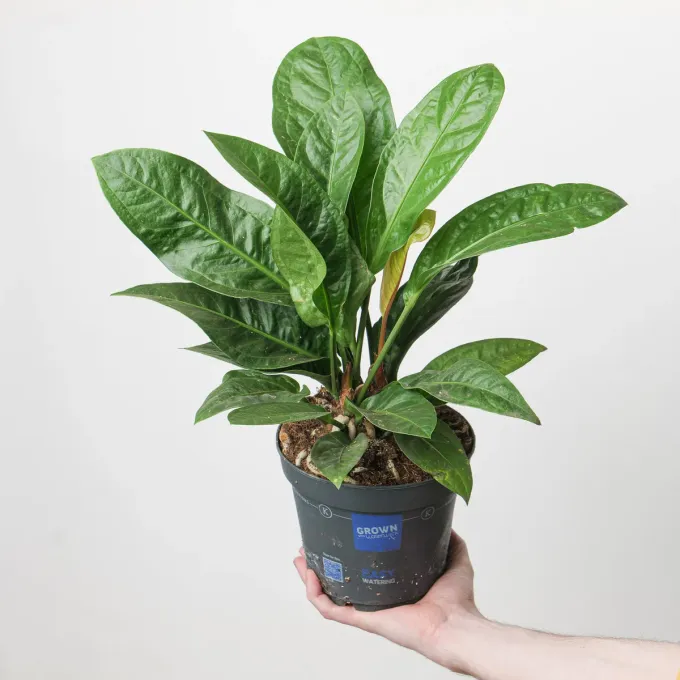
Description
Growing requirements
Anthurium crassinervium is a perennial species belonging to the Araceae family, native to the tropical forests of Venezuela and the Caribbean. It is highly valued for its large, distinctive foliage and unique botanical structure.
The plant thrives in warm, humid conditions, requiring a steady temperature range between 20°C and 28°C. It is sensitive to sudden temperature shifts and cold drafts, which can cause leaf necrosis.
Successful cultivation depends on high ambient humidity, ideally above 70%. In greenhouse environments, this is achieved through regular misting or automated irrigation systems that keep the air moist without oversaturating the soil.
The substrate must be light, airy, and well-draining, similar to the epiphyte-friendly mixes used for other tropical aroids. A combination of orchid bark, peat moss, and perlite provides the necessary root aeration.
Light levels should be bright but indirect. Intense direct sunlight will lead to scorched leaves, while poor lighting will result in slow growth and less vibrant foliage color.
Main diseases and pests
The primary fungal threats to this crop include leaf spots caused by various pathogens. These diseases are often exacerbated by stagnant air and waterlogged soil conditions.
Pests such as spider mites, scale insects, and mealybugs are common, especially when humidity levels drop or during the drier seasons in the cultivation cycle.
Root rot is a major physiological threat often resulting from improper watering practices. Over-watering creates an anaerobic environment that kills root hairs and invites opportunistic fungi.
Integrated pest management (IPM) practices are recommended, including routine monitoring of the leaf underside and the use of insecticidal soaps or horticultural oils for early control.
Sanitation practices, such as removing debris and ensuring adequate spacing between plants, are crucial to maintaining a healthy crop and preventing the spread of diseases.