
Andryala laxiflora
Andryala laxiflora
Description
Growing requirements
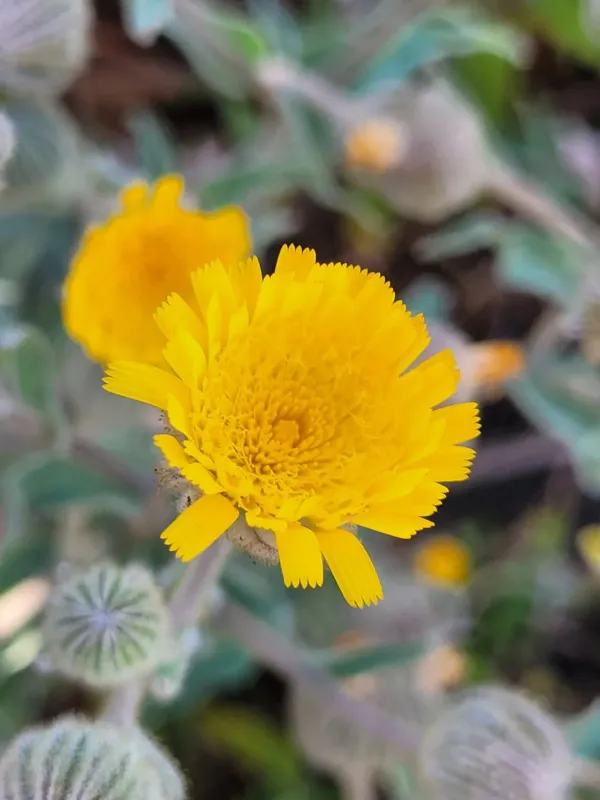
Andryala laxiflora is a perennial herb belonging to the Asteraceae family. It is known for its greyish-green foliage covered in fine hairs, which serves as a specialized adaptation to reduce water loss through transpiration in high-temperature environments.
Native to the Western Mediterranean, this species thrives in regions characterized by hot, dry summers and mild winters. It is traditionally found on rocky slopes, sandy plains, and coastal areas, demonstrating high resilience to nutrient-poor soil conditions.
The botanical structure of the plant includes a branched stem and yellow flower heads that resemble those of the related hawkweeds. Its morphological traits reflect a clear evolutionary focus on survival in low-water habitats, making it a sustainable choice for xeriscaping.
For agricultural and landscaping purposes, the cultivation of Andryala laxiflora requires well-drained, porous soils. Heavy, clay-rich soils are generally unsuitable unless amended with significant amounts of gravel or coarse sand to improve drainage and aeration.
Cultural management is straightforward due to the plant's hardy nature. It prefers full sun exposure and is highly tolerant of saline soils, making it an excellent candidate for restoration projects in coastal or degraded areas where irrigation is limited.
Main diseases and pests
The most significant threat to Andryala laxiflora in an agricultural setting is root rot caused by poor soil drainage. Excessive soil moisture, especially during the dormant season, can quickly lead to plant death and fungal colonization.
Pests, particularly aphids, can infest the floral parts during the spring growth flush. These pests weaken the plant by extracting sap and can act as vectors for various plant viruses if left unmanaged.
Powdery mildew is another potential concern, especially if the plants are placed in areas with low air movement. Ensuring proper spacing and keeping the foliage dry are primary cultural practices to minimize the risk of infection.
Integrated pest management (IPM) should prioritize early detection and the use of insecticidal soaps. Preventive measures such as choosing well-ventilated planting sites are often more effective than chemical intervention for this species.
Regular maintenance, including the removal of dead or diseased biomass, is essential to keep the crop healthy. By maintaining a balance between moisture levels and sunlight, the risks of typical field pests and diseases can be significantly reduced.