
Andryala integrifolia
Andryala integrifolia
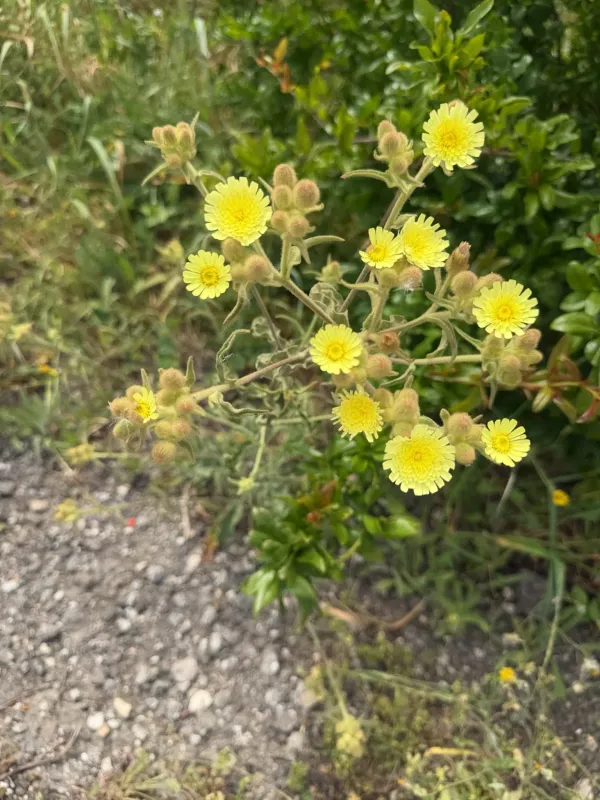
Description
Sowing dates
Andryala integrifolia, a member of the Asteraceae family, is an annual herb known for its adaptability in Mediterranean-type climates. Successful cultivation begins with choosing a suitable site during the spring months.
Seeds should be sown in prepared soil at a shallow depth of 1–2 cm. The soil must be fine-textured to ensure optimal seed-to-soil contact, which is crucial for uniform germination of this species.
Proper spacing is essential for plant health; maintaining 20–30 cm between rows allows sufficient airflow and prevents the development of fungal diseases caused by high humidity in the foliage.
The plant exhibits high germination vigor when soil temperatures are consistently above 15 degrees Celsius. Early weed management is vital as the seedling stage is the most vulnerable phase of its life cycle.
Regular monitoring of irrigation is required during the first 14 days after sowing to maintain adequate moisture in the root zone without creating waterlogged conditions.
Growing requirements
Andryala integrifolia thrives in full sunlight. Exposure to direct solar radiation is necessary for the plant to develop its characteristic dense leaf rosette and vigorous flowering stems.
This species is highly adaptable to well-drained soil types, particularly sandy or loamy soils. It demonstrates a notable preference for soils with a neutral to slightly alkaline reaction.
While the plant is moderately drought-tolerant, consistent moisture availability during the vegetative growth phase significantly enhances total biomass production for harvesting.
Soil drainage is a non-negotiable requirement. Poorly drained soils often lead to root rot and reduced plant vigor, as the species is sensitive to hypoxia in the root system.
It is best suited for climates with mild, moist springs and dry summers, mirroring its native Mediterranean distribution and typical environmental niches.
Main diseases and pests
The primary threats to Andryala integrifolia involve root pathogens when grown in compacted or overly wet soils. Fungal infections can quickly lead to systemic decay.
Aphids represent a common pest threat, particularly during the warm spring months. These insects feed on the succulent tissues of the young rosette leaves, causing curling and reduced photosynthesis.
Leaf-eating caterpillars may occasionally cause damage to the canopy. Regular field scouting is recommended to identify infestations early before they reach economic threshold levels.
Powdery mildew can occur if the plants are sown too densely, especially in areas with poor airflow and high humidity. Implementing proper spacing is the best prophylactic measure.
Effective management includes maintaining soil health, utilizing crop rotation to avoid the buildup of soil-borne pathogens, and implementing early-season biological control for aphids.
Harvesting
Harvesting Andryala integrifolia requires careful timing to maximize quality. For foliage production, the harvest occurs just before the transition from the vegetative stage to the reproductive stage.
Mechanical harvesting equipment should be calibrated to avoid damaging the crown of the plant. Cleanliness of the final product is a priority, especially when destined for drying and processing.
Seed harvesting requires waiting until the flower heads are fully mature and show signs of drying. To prevent seed loss due to natural dispersion, harvesting should be completed promptly once maturity is reached.
Post-harvest processing involves immediate drying in controlled conditions to preserve the integrity of the plant tissues. Avoiding excessive temperatures during drying is critical for maintaining quality.
Storage should be conducted in cool, dry environments to prevent rehydration and subsequent microbial spoilage of the harvested material.