
Andryala glandulosa
Andryala glandulosa
Description
Growing requirements
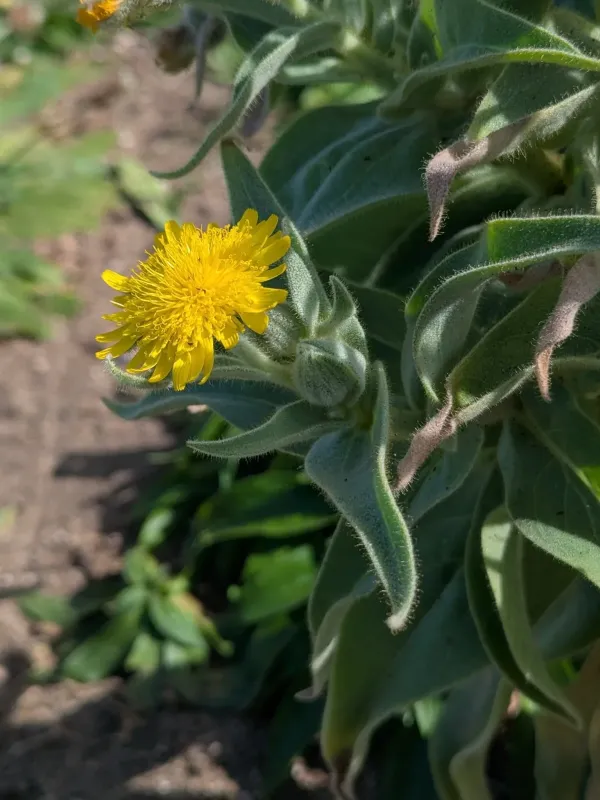
Andryala glandulosa is a perennial herbaceous plant belonging to the Asteraceae family. It is known for its distinct glandular pubescence, which gives the plant a characteristic appearance and serves as a defense mechanism against intense environmental radiation.
The native range of this species is limited to the Macaronesian region, specifically the Canary Islands and Madeira. It typically inhabits rocky substrates and cliffs, demonstrating an exceptional evolutionary adaptation to nutrient-poor and high-drainage environments.
For successful cultivation, the plant requires full sun exposure. It is highly adapted to arid conditions and can withstand prolonged periods without supplemental watering once the root system is established.
The soil profile must be loose, gritty, or sandy to ensure excellent drainage. Heavy clay soils are unsuitable and will likely lead to the rapid decline of the plant due to hypoxia in the root zone.
Temperature management is critical, as the species is sensitive to prolonged frost. In temperate agricultural practices, it is typically managed as a container plant that can be moved indoors or protected during winter months.
Main diseases and pests
The most prevalent threats to Andryala glandulosa are moisture-related fungal pathogens. Overwatering remains the primary cause of plant death, as it facilitates the growth of soil-borne pathogens such as Pythium and Rhizoctonia.
Aphids represent a frequent pest challenge, particularly on soft, new-growth tissues. These insects weaken the plant by extracting sap and can act as vectors for secondary viral infections.
Spider mites may manifest in greenhouse environments characterized by low humidity. Their feeding results in chlorotic spots and premature senescence of the foliage.
Disease prevention relies heavily on maintaining adequate air circulation. High humidity must be avoided, and foliage should be kept dry to prevent fungal spore germination.
Integrated pest management strategies are advised, prioritizing physical removal of pests and the application of mild, contact-based insecticidal soaps rather than systemic chemicals that could affect the delicate glandulose surfaces.