
Andryala crithmifolia
Andryala crithmifolia
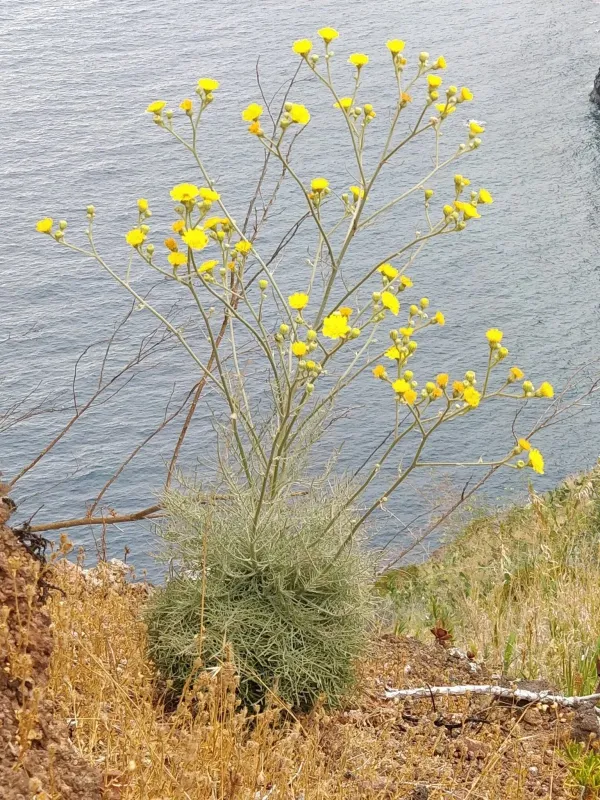
Description
Growing requirements
Andryala crithmifolia is a distinctive member of the Asteraceae family, native to the rugged terrains of Madeira. This perennial herb exhibits a specialized morphology adapted for survival in harsh, sun-exposed volcanic rock environments.
Successful cultivation of this species requires a substrate that mimics its natural habitat, emphasizing excellent drainage and low organic matter content. Standard garden soil is usually too heavy, making the inclusion of gravel or pumice essential for healthy root development.
The plant thrives in full sun, necessitating high light intensity to maintain its characteristic structure and vigor. Proper air circulation is critical, as stagnant, humid conditions often lead to rapid decline and susceptibility to pathogens.
In terms of agricultural management, Andryala crithmifolia is not a traditional crop but rather a specialized species for botanical conservation and rock gardening. It requires minimal irrigation, as it is physiologically adapted to arid intervals between infrequent rainfall.
Because the species is endemic to a limited range, its cultivation is largely focused on ex-situ conservation projects. Experts emphasize the importance of replicating the natural day-night temperature fluctuations to ensure long-term stability of the plants.
Main diseases and pests
The primary threats to this species include habitat degradation and the encroachment of invasive plant species that outcompete the slower-growing Andryala. Soil erosion in its natural range continues to reduce suitable sites for population expansion.
Pathogen risks are dominated by fungal issues such as crown and root rot, which are almost exclusively caused by overwatering or poor drainage systems. Avoiding excess moisture on the foliage is a key preventive cultural practice.
Insect pests, specifically aphids and spider mites, can colonize the plants, particularly when grown in sheltered, less-ventilated conditions. Integrated pest management strategies using biological controls are preferred to preserve the health of these rare specimens.
Climate instability, characterized by unseasonable heatwaves or prolonged rainy spells, can place significant stress on the plant’s physiological processes. Monitoring for early signs of stress is vital for immediate intervention in nursery settings.
Given its status as a rare endemic plant, the threat of over-collection for private collections poses an ethical and ecological concern. Promoting responsible propagation from existing stock is the primary way to mitigate these pressures on wild populations.