
Anacampseros tomentosa
Anacampseros tomentosa
Description
Growing requirements
Anacampseros tomentosa belongs to the Anacampserotaceae family and is a compact, slow-growing succulent native to the arid regions of Southern Africa. In its natural habitat, it thrives in rocky outcrops and dry climates, having adapted to extreme environmental conditions.
To cultivate this species successfully, it is essential to provide intense, bright sunlight. Placing the plant in a position where it receives several hours of direct light daily ensures that the leaves maintain their characteristic dense structure and the plant does not become etiolated.
The substrate must be highly porous and inorganic. A professional cactus mix combined with equal parts of grit, perlite, or pumice is recommended. This high-drainage composition is vital for preventing moisture retention, which is the primary enemy of succulent roots.
Watering requires caution and strict adherence to the plant's seasonal rhythm. During the active growing season, water only after the substrate has completely dried out. During the winter dormancy period, watering should be suspended almost entirely to mirror the dry cycle of its native environment.
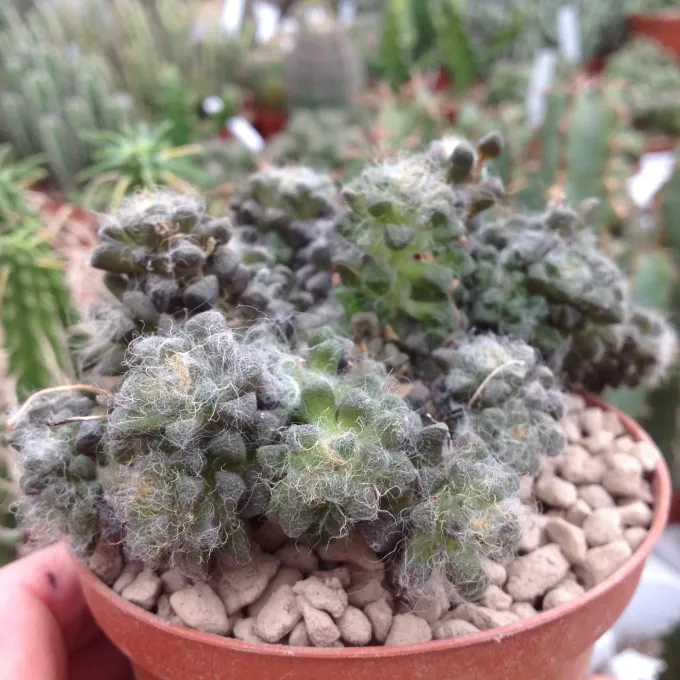
The aesthetic and biological appeal of this plant is centered on its woolly, hair-like leaf coverings. This felt-like structure serves as a sophisticated evolutionary mechanism designed to trap moisture and protect the epidermis from harsh UV radiation and excessive heat.
Main diseases and pests
The most critical threat to the health of Anacampseros tomentosa is root rot caused by stagnant water or inadequate drainage. Once the root system is compromised by fungal pathogens due to overwatering, the plant usually fails to recover, making prevention the best strategy.
Mealybugs are the most common pest that attacks this succulent. They tend to lodge themselves deep within the woolly hairs of the foliage, making them difficult to detect and treat without specialized contact or systemic insecticides that are safe for delicate succulents.
In environments with poor air circulation and high humidity, the plant may develop fungal or bacterial infections. Maintaining a constant, gentle flow of air is crucial for keeping the leaf tissue dry and healthy, particularly after light misting or seasonal cleaning.
Spider mites are occasional pests that flourish in warm, excessively dry indoor conditions. Infestations are typically characterized by fine webbing and yellowing patches on the leaves. Early detection is essential to prevent significant damage to the plant's delicate woolly structure.
Regular maintenance, including the removal of dead or dried leaves and the inspection of the crown for signs of pests, is recommended. Keeping the plant in a stable environment will ensure it remains resistant to common pathogens and continues to develop its unique morphology.