
Anacampseros namaquensis
Anacampseros namaquensis
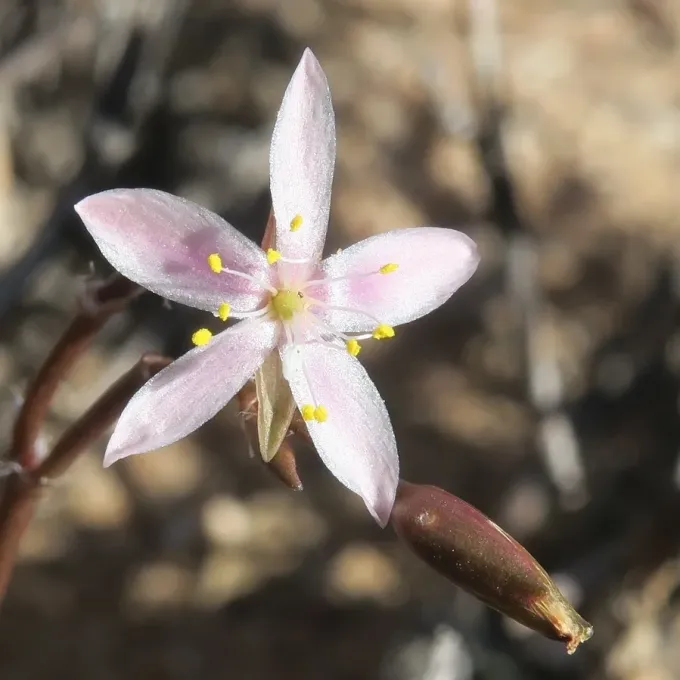
Description
Growing requirements
Anacampseros namaquensis is a distinctive species of succulent plant belonging to the Anacampserotaceae family. It is native to the arid environments of the Northern Cape in South Africa and Namibia.
Botanically, it is characterized by its compact, tuberous structure and dense white hairs (stipules) that cover its leaves, serving as a protective mechanism against extreme sunlight and heat.
To cultivate this species successfully, it requires full, direct sunlight to maintain its structural integrity and prevent the plant from becoming etiolated or losing its characteristic, dense appearance.
The soil must be highly inorganic and free-draining. A professional mix consisting of one part potting soil to three parts grit or pumice is recommended to ensure rapid moisture evaporation.
Watering should be conducted sparingly during the summer growing season. During the winter, the plant enters a dormant stage and requires almost completely dry conditions to prevent root rot.
Main diseases and pests
Overwatering is the primary cause of mortality for Anacampseros namaquensis. Excessive moisture trapped in the soil leads to rapid fungal decay of the root system and succulent tissues.
Mealybugs are the most persistent pests for this plant, as they frequently camouflage themselves within the thick, white hairy stipules, making manual removal difficult.
Spider mites may also pose a threat if the ambient humidity is kept too low for extended periods, leading to stunted growth and damage to the epidermis of the leaves.
To mitigate risks, growers should maintain adequate airflow around the plant, which helps keep the foliage dry and discourages the establishment of pests and mold.
Regular inspection is essential; any signs of stem discoloration or softness near the soil line should be addressed immediately by repotting into a drier, sterilized substrate.