
Anacampseros herreana
Anacampseros herreana
Description
Growing requirements
Anacampseros herreana is a unique succulent species belonging to the Anacampserotaceae family. This fascinating plant originates from the arid regions of Southern Africa, specifically Namibia, where it has evolved to thrive in harsh, desert-like conditions.
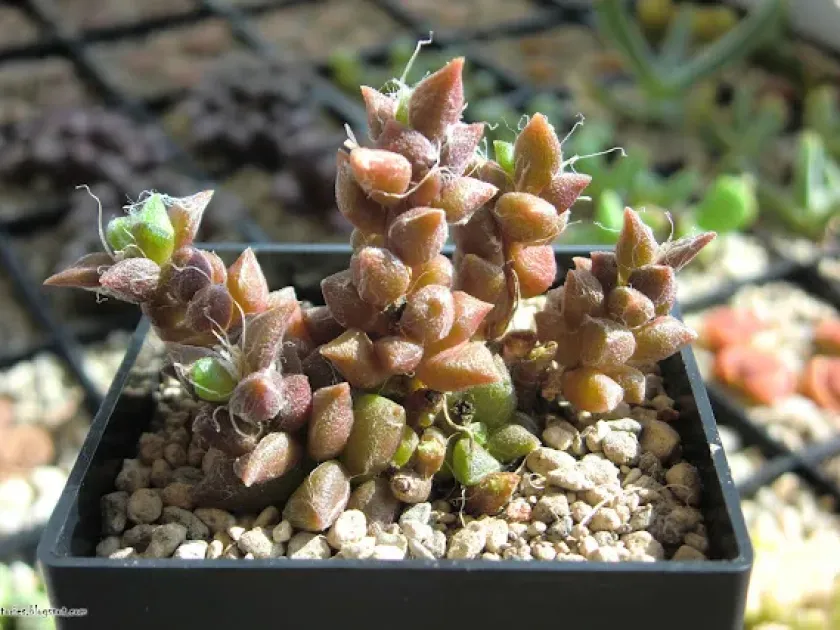
The plant features compact stems covered with dense, scale-like leaves. These structures act as protective layers, significantly reducing water loss through transpiration and protecting the inner tissues from intense UV radiation.
Cultivation requires a highly porous and well-draining substrate to prevent root rot. A mix consisting of grit, coarse sand, and a minimal amount of organic matter is essential for mimicking its natural rocky habitat.
Sufficient light exposure is vital for the health of Anacampseros herreana. It requires direct sunlight or very high-intensity artificial light to maintain its characteristic compact form and prevent etiolation of the stems.
Watering practices must be strictly controlled, allowing the soil to dry out completely between waterings. During the winter dormancy period, watering should be significantly reduced or stopped entirely to prevent fungal outbreaks.
Main diseases and pests
The most common threat to this culture is overwatering, which quickly leads to root decay and stem rot. Proper drainage is the primary defense against these fatal conditions, as the root system is highly sensitive to stagnant moisture.
Mealybugs are the most frequent pests affecting the plant. They thrive in the crevices between the scale-like leaves, making them difficult to detect and eradicate without thorough and frequent inspections.
Spider mites can also be a problem, particularly in environments with poor air circulation and low humidity. These pests feed on the plant's fluids, causing discoloration and weakening the overall structure of the succulent.
Integrated pest management, including systemic insecticides and good ventilation, is recommended to control populations. Avoid heavy oil-based sprays, as they can compromise the plant's natural protective waxy coating.
Preventive maintenance includes periodic inspection of the root zone and immediate isolation of any symptomatic plants. Proper sanitation of tools and substrate components further reduces the risk of long-term contamination.