
Anacampseros arachnoides
Anacampseros arachnoides
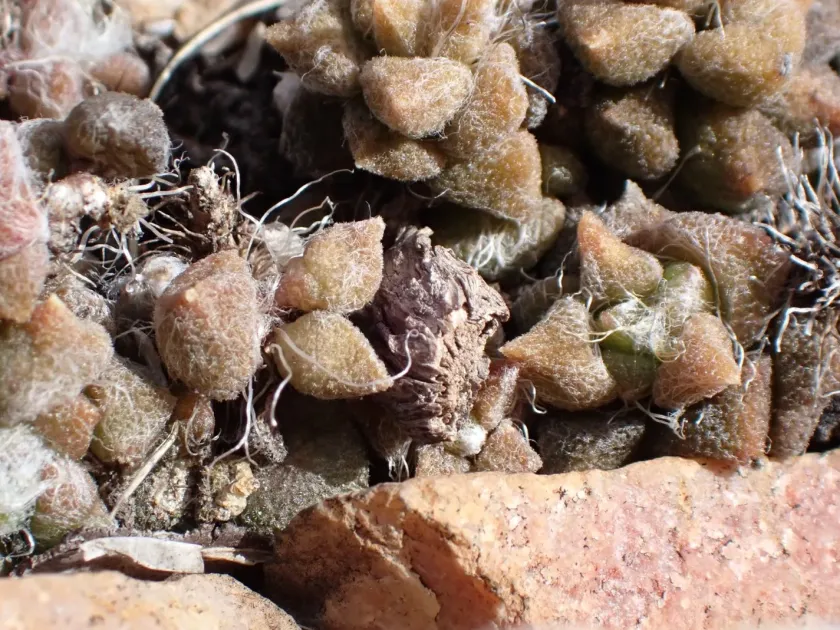
Description
Sowing dates
Sowing seeds of Anacampseros arachnoides is best carried out in late spring or early summer when stable warm weather prevails. The optimal temperature for germination is between +22 and +25 degrees Celsius.
Use a sterile substrate consisting of a mixture of sand, perlite, and loam in equal proportions. The soil surface should be leveled, and seeds should be distributed evenly across the top without deep burial into the medium.
After sowing, cover the container with glass or a transparent film to create a greenhouse effect. It is important to ventilate the seedlings daily to prevent mold growth and moisture stagnation in the soil.
The first sprouts usually appear 10–20 days after sowing, provided that humidity is kept stable. Once full cotyledons emerge, the cover is gradually removed to adapt the seedlings to the natural room humidity.
Pricking out the seedlings should be performed no earlier than 6 months after germination, once the plants have developed a sufficient root system. Transplantation should be done by transfer to avoid damaging the delicate succulent roots.
Growing requirements
Anacampseros arachnoides is a miniature perennial succulent from the Anacampserotaceae family, native to South Africa. The plant features unique spider-web-like filaments covering its leaf rosettes, which help the plant retain moisture.
The culture requires maximum bright light throughout the day. Direct sunlight promotes the development of dense filaments and prevents stem elongation, which is critical for the visual appeal of the species.
The soil mixture must have excellent drainage properties, as water stagnation is fatal to the roots. Specialized ready-made mixes for cacti with the addition of coarse sand or gravel are ideal for this purpose.
Watering should be moderate and strictly controlled. In summer, the substrate should be moistened only after it has completely dried out, while in winter, the plant enters a dormant phase and requires almost dry conditions at lower temperatures.
For successful home growth, it is essential to ensure good air circulation around the rosette. Stagnant, humid air can lead to leaf rot, especially those hidden under the dense layer of characteristic spider-like hairs.
Main diseases and pests
The main threat to the culture is root rot, which occurs due to systematic waterlogging of the soil. The disease spreads rapidly, so if the stem shows any signs of softness, the plant must be immediately transplanted into fresh, dry substrate.
Among pests, the mealybug causes the most damage, often hiding in the leaf axils under the protection of the web-like hairs. Detecting it at an early stage is difficult, so regular inspection is highly recommended.
Spider mite infestations are also possible, especially in conditions of excessively dry air at high temperatures. The mite damages the leaf epidermis, leaving characteristic pale spots and causing growth deformation.
For preventative measures, a monthly inspection of the plant's surface using a magnifying glass is advised. If pests are detected, systemic insecto-acaricides should be applied to eliminate the colony.
Owners should avoid getting water directly into the leaf rosette during watering. It is better to use the immersion method, placing the pot in a basin of water or watering along the container edge to keep the aerial parts dry.