
Anacampseros telephiastrum
Anacampseros telephiastrum
Description
Growing requirements
Anacampseros telephiastrum is a distinctive miniature succulent belonging to the Anacampserotaceae family. Originating from the arid, rocky regions of South Africa, this plant has evolved to thrive in nutrient-poor environments with extreme fluctuations in water availability.
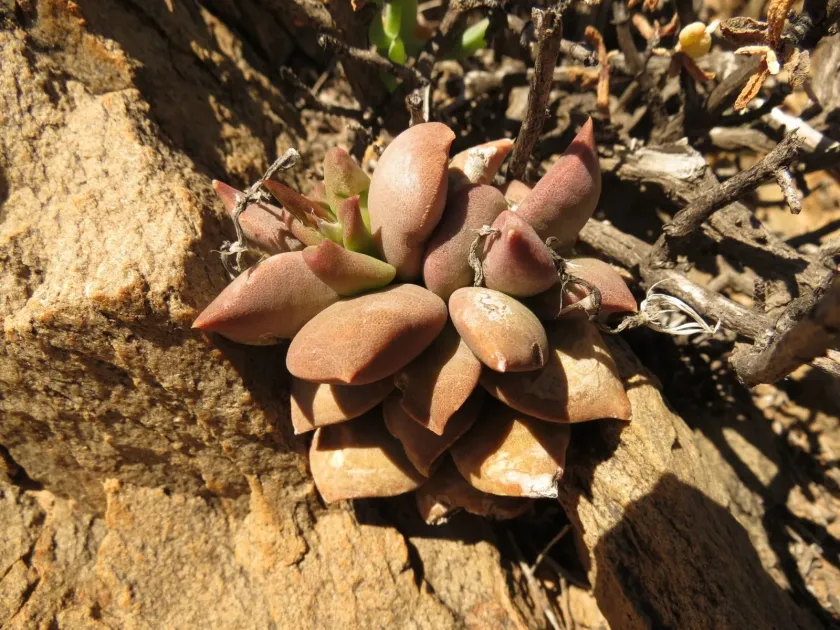
The plant grows in low rosettes of fleshy, ovate leaves. A signature botanical feature is the presence of fine, hair-like bristles extending from the axils of the leaves, which provide partial protection from the intense solar radiation encountered in its native habitat.
Cultivation requires bright, direct sunlight to maintain the plant's characteristic vibrant foliage coloration and compact growth habit. In indoor settings, it should be placed in the sunniest location available to prevent etiolation, where the plant loses its dense shape and turns pale green.
The soil requirement is strictly porous. A commercial succulent mix amended with additional drainage materials, such as horticultural grit, coarse sand, or perlite, is essential to allow for rapid water drainage and root aeration, preventing the soil from staying wet for too long.
Temperature management should follow seasonal cycles. During the growing season, it prefers warm conditions ranging from 20 to 25 degrees Celsius. A winter rest period is vital, during which temperatures should be lowered to around 10–12 degrees Celsius to trigger dormant metabolism.
Main diseases and pests
The primary threat to the health of Anacampseros telephiastrum is waterlogging. Excessive moisture in the substrate leads to rapid rot of the root system and the base of the rosette, which is often fatal if not caught in the early stages of the decay process.
Mealybugs are the most common pest affecting this species. They find shelter within the leaf axils and beneath the plant's protective hairs, making them difficult to detect early. Infestations result in stunted growth and the loss of aesthetic appeal.
Spider mites can also cause significant damage in dry indoor conditions. These pests feed on the cell sap of the leaves, leaving behind pale spots and potentially weakening the plant, making it more susceptible to secondary fungal or bacterial infections.
Root rot is almost exclusively a result of poor horticultural practice, such as using heavy, peat-based soils or pots without adequate drainage holes. It is essential to ensure that the container size matches the root mass to avoid excessive moisture retention.
Proper ventilation is a key preventive measure against pests and disease. Stagnant air coupled with moisture provides the perfect breeding ground for fungal pathogens. Always provide good airflow around the plants and avoid overhead watering to keep the leaves dry.