
Anacampseros recurvata
Anacampseros recurvata
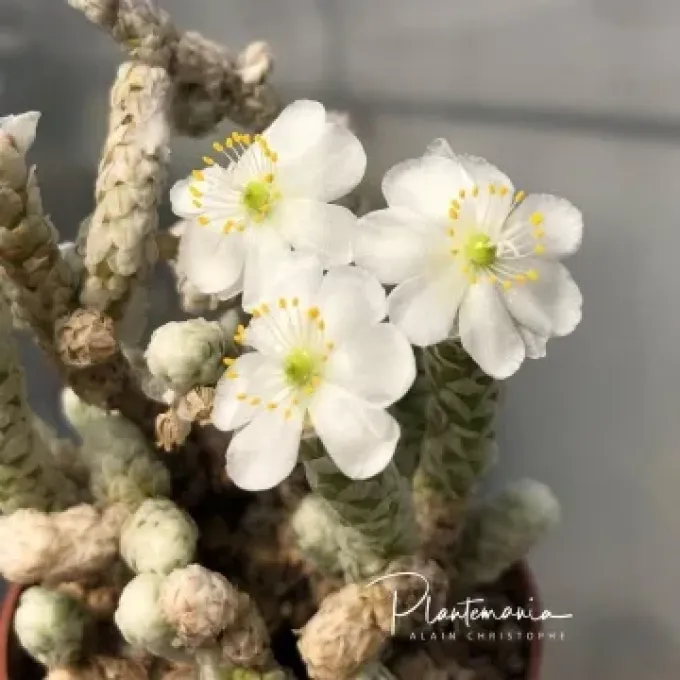
Description
Sowing dates
Propagation of Anacampseros recurvata is typically performed via vegetative cuttings, which should be allowed to callus for several days before being placed in soil.
Seed sowing is best conducted during the spring season to take advantage of the natural increase in sunlight and temperatures conducive to germination.
The sowing medium should consist of a well-draining mineral mix, ensuring that seeds are pressed lightly into the surface rather than buried deeply.
Maintained humidity is critical in the first few weeks, though it must be balanced with adequate airflow to prevent the damping-off of seedlings.
Once the young plants reach a diameter of one centimeter, they can be transplanted into individual containers to allow for more space and root development.
Growing requirements
Anacampseros recurvata belongs to the Anacampserotaceae family and is a distinctive, slow-growing succulent native to the arid regions of Southern Africa.
The plant is adapted to extreme heat and periodic droughts, exhibiting a rosette formation that minimizes water loss through transpiration.
Successful cultivation requires a bright location with several hours of direct morning sunlight to maintain the compact growth habit and natural coloration.
The soil profile must be extremely porous, favoring mixes comprised primarily of pumice, perlite, and coarse sand to ensure rapid water runoff.
During the dormant winter season, the plant requires a cool and dry environment, with temperatures held between 10 and 15 degrees Celsius to trigger spring flowering.
Main diseases and pests
Root rot remains the primary threat to the longevity of the plant, often induced by improper soil drainage or excessive watering frequency.
Mealybugs are known to infest the dense leaf clusters, making them difficult to detect until the plant exhibits signs of significant distress.
Fungal pathogens can colonize the plant during periods of prolonged high humidity, particularly when there is insufficient ventilation in the greenhouse environment.
Integrated pest management strategies, such as using horticultural soaps, are recommended for the safe eradication of pests without damaging the foliage.
Ensuring that no water remains in the crown of the plant after watering is a crucial step in preventing bacterial decay and opportunistic infections.