
Anacampseros quinarioides
Anacampseros quinarioides
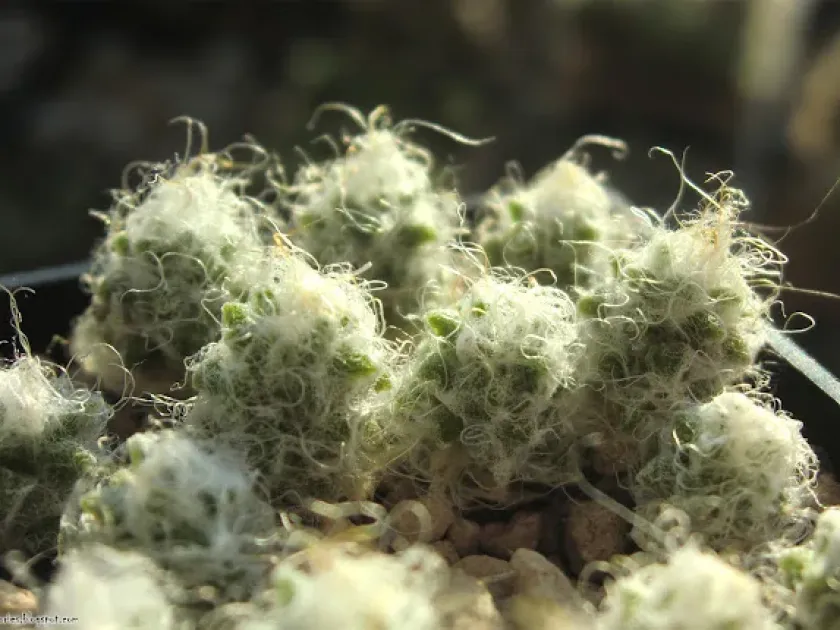
Description
Growing requirements
Anacampseros quinarioides is a unique succulent species belonging to the Anacampserotaceae family. It is native to the arid landscapes of Southern Africa, where it has evolved to thrive in rocky, nutrient-poor environments with minimal rainfall.
The plant features a compact, tufted growth habit with fleshy stems covered by imbricate, scale-like leaves. Its most distinctive characteristic is the presence of fine, silky white hairs that cover the stems, providing protection from harsh UV radiation and reducing transpirational water loss.
In terms of cultivation, the plant requires a highly porous and inorganic soil mix. A suitable medium should consist of grit, pumice, and coarse sand, ensuring that water drains away from the roots almost immediately after watering to prevent root asphyxiation.
Regarding climate requirements, this species demands maximum sunlight exposure. It is crucial to position the plant in a bright, sunny spot, such as a south-facing windowsill or a greenhouse with high light intensity to maintain its characteristic compact morphology.
The primary use of Anacampseros quinarioides is in ornamental horticulture and botanical collections. Due to its sculptural appearance and small size, it is a favored species among succulent enthusiasts who appreciate rare and slow-growing flora that requires minimal intervention.
Main diseases and pests
The most significant threat to the health of Anacampseros quinarioides is overwatering, which quickly leads to root rot. Even in the growing season, the substrate must be allowed to dry out completely between successive waterings to mimic its natural environment.
Pest issues commonly involve mealybugs, which are notoriously difficult to control due to their ability to hide beneath the dense hairs on the leaves. Regular inspection with a magnifying glass is recommended to detect early infestations before they spread.
If mealybugs are identified, systemic insecticides or horticultural oils may be used. However, one must be cautious, as the fine hairs on the leaves can trap chemicals and potentially lead to phytotoxicity if not applied correctly.
Fungal pathogens represent another significant risk, often manifesting as brown spots or stem softening. These diseases are usually a direct result of poor air circulation and excessive humidity, requiring improved ventilation and a drier climate for the plant to recover.
To ensure long-term plant health, cultivators should implement a strict quarantine protocol for new plants entering a collection to prevent the spread of soil-borne pests or latent fungal infections that could jeopardize existing specimens.