
Anacampseros quinaria
Anacampseros quinaria
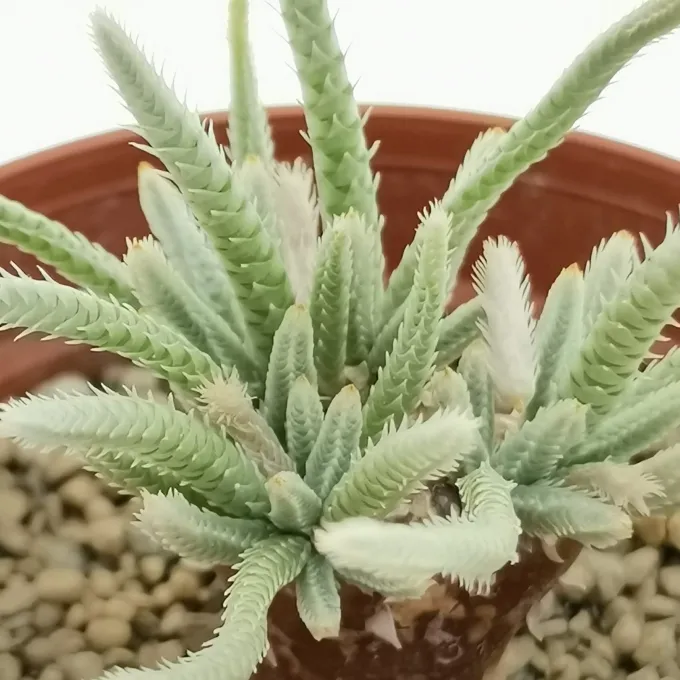
Description
Growing requirements
Anacampseros quinaria is a fascinating succulent belonging to the Anacampserotaceae family, native to the arid landscapes of South Africa. This species is highly valued by collectors for its compact growth habit and distinct morphological features.
The plant develops a substantial caudex, which serves as a specialized organ for water storage. This biological adaptation allows the plant to survive in extreme habitats where rainfall is minimal and temperatures fluctuate significantly throughout the year.
Cultivation requires a highly porous, inorganic-based potting medium. A blend of grit, pumice, and coarse sand provides the necessary aeration and drainage to mimic the rocky outcrops where these plants naturally thrive in the wild.
Exposure to direct sunlight is essential to maintain the plant's structural integrity. Without sufficient light, Anacampseros quinaria will become etiolated, losing its characteristic low-profile shape and unique leaf colorations.
Temperature management requires a clear distinction between the active growing season and the winter dormancy. During the dormant months, the plant must be kept dry and cool, which is essential to encourage flowering in the following spring.
Main diseases and pests
The primary threat to the health of Anacampseros quinaria is root rot, typically caused by improper watering techniques. Soil that remains damp for extended periods quickly leads to the decay of the sensitive caudex and root system.
Mealybugs are the most common insect pest encountered during cultivation. They tend to cluster around the stems and within the dense hair-like structures of the leaves, making manual removal or insecticide application challenging.
Root mealybugs can also pose a severe risk, as they remain hidden beneath the soil surface. Regular inspection of the root ball during repotting is a recommended practice to detect infestations before they cause irreversible damage.
Environmental management, such as maintaining good airflow, is crucial in preventing pest outbreaks. Stagnant air often creates a microclimate that favors the rapid multiplication of spider mites and other harmful insects.
In case of infestation, systemic insecticides are the most effective solution. However, growers should exercise caution and ensure that the chosen treatment is compatible with the plant's delicate surface structures, avoiding overly oily or abrasive substances.