
Ampelopsis delavayana
Ampelopsis delavayana
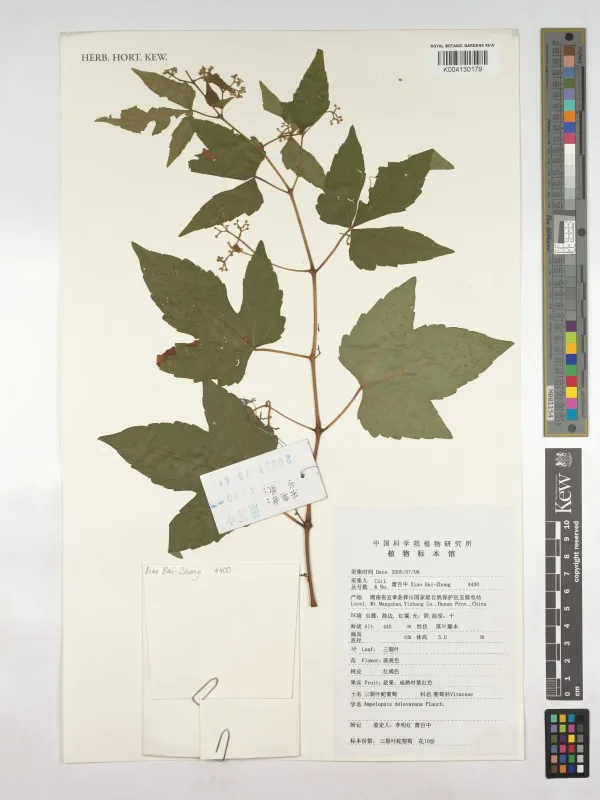
Description
Growing requirements
Ampelopsis delavayana is a perennial woody vine belonging to the Vitaceae family. Known for its aesthetic appeal and vigorous climbing habit, this plant utilizes specialized tendrils to scale walls, fences, and various support structures in garden settings.
Originating from the mountainous regions of China, this species has adapted to various temperate conditions. It is highly valued by horticulturists for its delicate foliage texture and the unique visual interest provided by its developing fruit clusters.
The plant thrives in fertile, well-draining soil with a neutral to slightly acidic pH. Proper soil preparation before planting is essential to ensure a robust root system capable of supporting the vine’s fast-growing, extensive aerial biomass.
Regarding climate requirements, it prefers sunny locations but can tolerate partial shade. While somewhat hardy, young plants benefit from sheltered spots protected from strong, drying winds that could damage tender climbing shoots during the early stages of establishment.
In landscape architecture, Ampelopsis delavayana is primarily utilized for vertical gardening. It is an excellent choice for screening, covering pergolas, or softening the appearance of large masonry structures through its dense, lush foliage.
Main diseases and pests
The culture is generally resilient, yet it may suffer from fungal issues such as powdery mildew or various leaf spot diseases, especially in environments with poor air circulation or excessive humidity.
Pest pressures primarily include sap-sucking insects, such as aphids and spider mites, which can proliferate rapidly during periods of high temperature and low rainfall, leading to stunted leaf development.
Effective management involves regular monitoring of the foliage and implementing early intervention strategies, including the use of horticultural soaps or systemic insecticides when infestation levels exceed economic thresholds.
To reduce disease risk, it is crucial to maintain adequate spacing between plants and conduct regular thinning of the foliage, which improves airflow and reduces the moisture levels necessary for fungal spore germination.
Root health is equally critical; ensuring the soil does not become waterlogged prevents the onset of root rot, which is a frequent cause of decline in established vine plantations.