
Ampelopsis cordata
Ampelopsis cordata
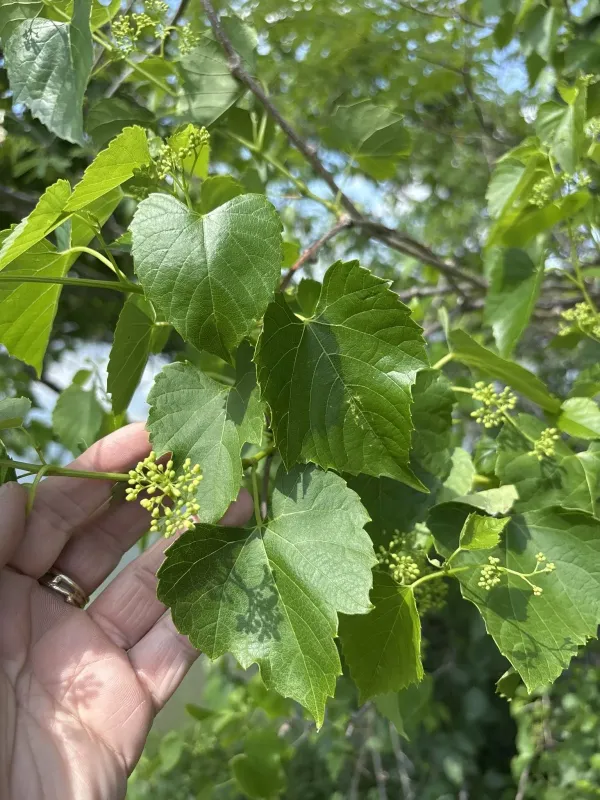
Description
Growing requirements
Ampelopsis cordata, commonly known as the heart-leaf peppervine, is a deciduous woody vine belonging to the Vitaceae family. Native to the central and southeastern United States, this plant is frequently found thriving in thickets, riverbanks, and floodplains, demonstrating its preference for nutrient-rich environments.
The plant is characterized by its cordate, or heart-shaped, leaves which provide dense foliage throughout the growing season. In autumn, the plant often produces clusters of small, dark blue berries, which are an important food source for local bird populations, though they are not consumed by humans.
Optimal growth conditions for this species include full sun to partial shade and moist, well-draining soil. It exhibits high tolerance to a variety of soil types, including those that are temporarily wet, making it a robust choice for difficult landscape spots where other climbers might struggle.
A crucial aspect of Ampelopsis cordata management is the provision of adequate vertical support. Whether using trellises, fences, or arbors, the vine utilizes its tendrils to scale surfaces rapidly. Regular pruning is necessary to control its vigorous growth and prevent it from overtaking surrounding vegetation.
In terms of climate adaptability, this vine is relatively hardy and can survive significant temperature drops once established. However, keeping the root system mulched during the first two winters is recommended to protect the plant while it builds up its structural foundation.
Main diseases and pests
While generally resistant, Ampelopsis cordata can be susceptible to common garden pests such as Japanese beetles, which feed on the foliage. Monitoring during the peak summer months is advisable, and manual removal or appropriate treatments should be employed if infestation levels become significant.
Fungal issues, including powdery mildew, may occur during periods of high humidity and poor airflow. Improving garden spacing and ensuring proper circulation around the vines are the primary preventative measures to maintain the health and vigor of the specimen throughout the season.