
Porcelain berry
Ampelopsis brevipedunculata
Description
Growing requirements
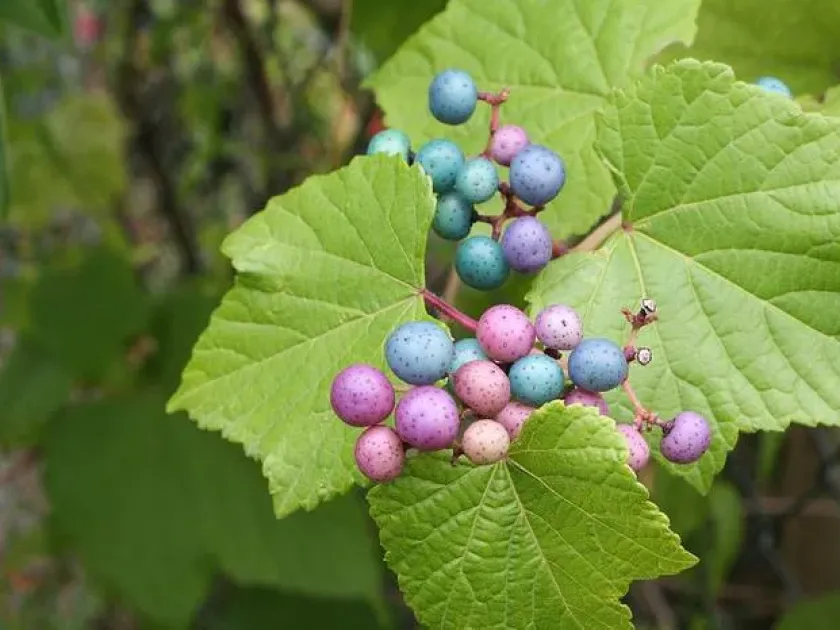
The porcelain berry (Ampelopsis brevipedunculata) is a vigorous deciduous climbing vine belonging to the Vitaceae family. Native to East Asia, it has become a popular ornamental plant due to its unique, multi-colored berries and rapid growth habit, which allows it to cover vertical surfaces effectively.
This species thrives in well-drained, fertile soil and prefers locations with full sun to partial shade. While it is highly adaptable, the plant displays its best coloration and fruit production when provided with consistent moisture and protection from harsh, drying winter winds.
Agrotechnical management requires the installation of sturdy, permanent trellis systems or fences to support the heavy mature vines. Without proper support, the plant will trail along the ground, which may lead to reduced air circulation and an increased risk of fungal infections within the foliage.
Pruning is essential for maintaining the shape and vigor of the porcelain berry. Regular annual pruning, typically performed in late winter, helps remove dead wood and prevents the vine from becoming overly aggressive or taking over unwanted areas of the landscape.
In addition to its decorative utility, the plant is known for its ecological resilience. It develops deep root systems that help stabilize soil on slopes, making it a functional choice for erosion control in gardens that require both aesthetic appeal and environmental stability.
Main diseases and pests
Powdery mildew is the most common concern for porcelain berry, especially in environments with high humidity and poor airflow. Preventive measures include proper spacing during planting and thinning out branches to ensure the canopy dries quickly after rainfall.
While generally robust, the plant can attract aphids and scale insects. Monitoring the undersides of the leaves during the early summer months allows for early intervention, using horticultural oils or soaps to manage populations before they cause significant damage to the plant's aesthetic value.
Winter injury can occur in colder climates, where the tips of current-year shoots may die back during extreme temperature fluctuations. Pruning these damaged tips in the spring is standard practice and does not harm the overall health or vigor of the plant.
Soil-borne pathogens may affect the plant if the site is poorly drained and prone to persistent waterlogging. Ensuring that the root zone has adequate aeration is critical, as excessive moisture can lead to root rot, which is difficult to manage once established.
Competition from invasive weeds should be managed during the plant's establishment phase. Keeping the area beneath the vine free of grass and weeds ensures that the plant has access to necessary nutrients and water during its critical first two years of growth.