
Ampelopsis chaffanjonii
Ampelopsis chaffanjonii
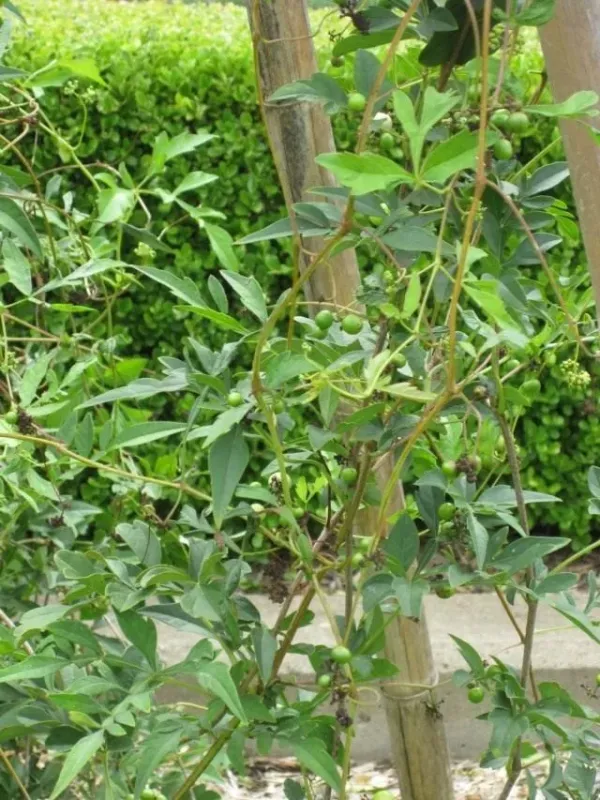
Description
Growing requirements
Ampelopsis chaffanjonii is a perennial woody climber belonging to the Vitaceae family. Originating from East Asia, this vine thrives in natural forest habitats, utilizing its tendrils to scale vertical structures and forest vegetation efficiently.
The botanical characteristics include a vigorous growth habit and distinctively shaped, often deeply lobed leaves. During the growing season, the foliage provides dense cover, making it a popular choice for vertical gardening and ornamental landscaping.
Environmental requirements focus on exposure to filtered sunlight or partial shade. While the species is quite adaptable, maintaining an appropriate balance of light is crucial for maximizing leaf color and overall plant vigor.
Soil quality should be high, featuring loose, nutrient-rich, and well-drained medium. In gardening practice, it is advised to amend heavy soils with organic matter to prevent waterlogging, which the plant generally dislikes.
Regarding climate, the plant exhibits a notable degree of hardiness. However, young specimens benefit from protective mulching in regions experiencing severe frost to ensure the long-term survival of the root system.
Main diseases and pests
Fungal infections, particularly powdery mildew, represent a significant threat to Ampelopsis chaffanjonii, especially when air circulation is poor or humidity levels remain consistently high.
Pests like spider mites can become an issue during dry, hot spells. These insects feed on sap, often causing the leaves to yellow or develop necrotic spots, which reduces the plant's decorative aesthetic.
Integrated pest management is recommended, focusing on maintaining plant health through proper spacing and moisture control rather than immediate reliance on chemical pesticides.
Root rot is a physiological threat often linked to poor drainage or excessive irrigation. It is essential to ensure that the site allows for natural water percolation to keep the root system healthy.
Regular maintenance, including the removal of dead or diseased wood during the dormant season, is a fundamental practice to limit the spread of pathogens and maintain a clean growing environment.