
Alocasia Zebrina
Alocasia zebrina Schott ex Van Houtte
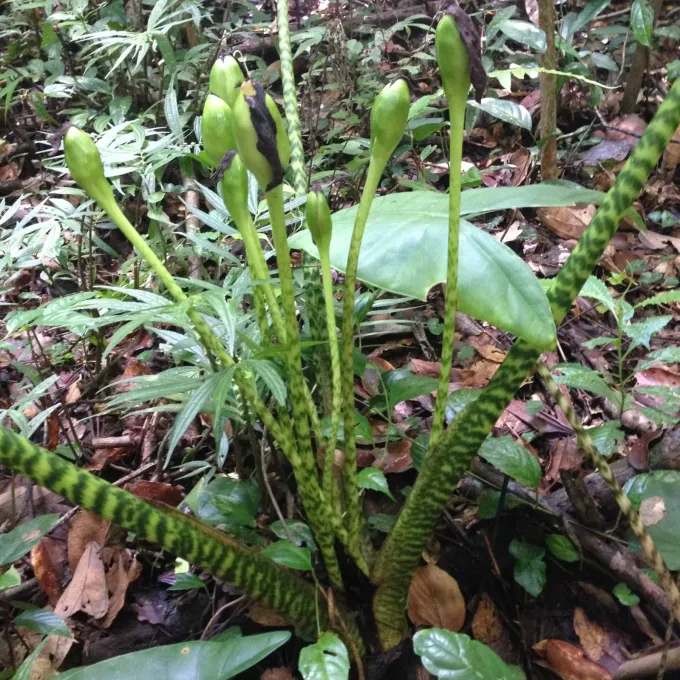
Description
Growing requirements
Alocasia Zebrina (Alocasia zebrina) is a stunning ornamental perennial belonging to the Araceae family. Native to the tropical rainforests of the Philippines, it is highly valued for its distinct, striped petioles that resemble zebra markings, giving the plant its common name.
The plant thrives in warm, humid environments, requiring temperatures between 20°C and 26°C. It is intolerant of cold drafts, which can cause physiological stress, manifested as leaf drop or the yellowing of the foliage, impacting the plant's aesthetic value and overall health.
Cultivation requires a well-draining, nutrient-rich, and slightly acidic substrate. A mixture comprising peat moss, orchid bark, perlite, and horticultural charcoal is ideal for maintaining the soil porosity necessary for the development of its rhizomatous root system.
The crop prefers bright, indirect light to maintain its vibrant pattern. While it can adapt to lower light conditions, prolonged exposure to direct sunlight will scorch the leaves, so careful placement in indoor or greenhouse settings is essential for consistent growth.
Watering management is a critical component of the plant's agrotechnics. The substrate should be kept consistently moist but never waterlogged. Overwatering is the primary cause of failure in Alocasia production, often leading to rapid root decay and mortality.
Main diseases and pests
Common pests affecting Alocasia Zebrina include spider mites, mealybugs, and scale insects. These pests thrive in dry conditions and can cause severe damage to the foliage and stems if not detected and treated with appropriate acaricides or systemic insecticides.
Fungal pathogens such as Phytophthora and various root rots are frequent threats in greenhouse environments. These diseases are primarily driven by poor drainage, excessive soil moisture, and high humidity combined with stagnant air circulation.