
Alocasia scalprum
Alocasia scalprum A. Hay
Description
Growing requirements
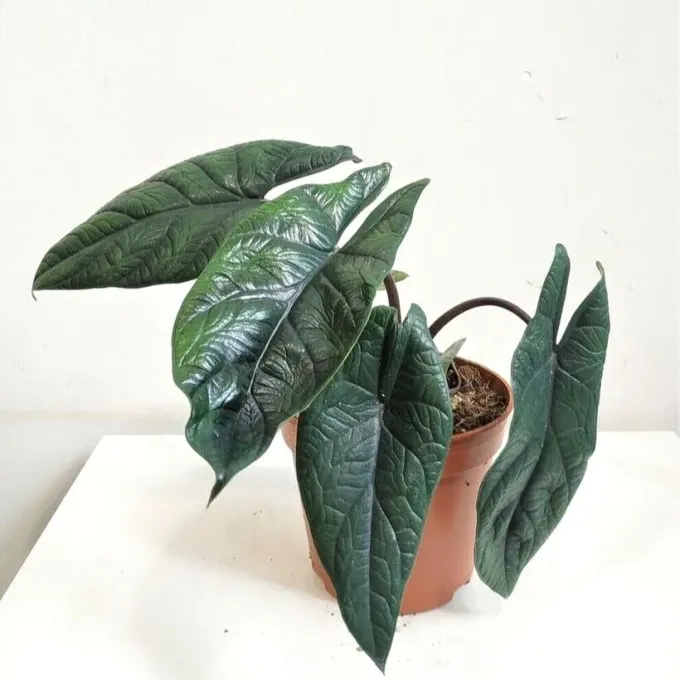
Alocasia scalprum is a distinctive species within the Araceae family, native to the tropical rainforests of the Philippines. It is highly valued by collectors for its thick, leathery, and dark green leaves that feature a unique, knife-like shape, making it a rare gem in botanical collections.
Cultivation requirements for this species are centered on maintaining high ambient humidity, ideally between 70% and 80%. This mimics its natural habitat, where the plant thrives under the canopy in warm, humid conditions that prevent its dense leaves from dehydrating.
Optimal growth occurs at temperatures ranging from +22°C to +27°C. It is imperative to avoid temperature fluctuations and cold drafts, as the plant is sensitive to thermal stress, which can lead to leaf drop or metabolic dormancy if the temperature consistently falls below +18°C.
The substrate must be exceptionally well-draining and airy to prevent root asphyxiation. A high-quality aroid mix, consisting of equal parts coconut husk, perlite, charcoal, and orchid bark, is recommended to ensure that oxygen reaches the roots effectively while maintaining slight moisture.
Light requirements for Alocasia scalprum are moderate; it requires bright, indirect light to maintain its signature deep pigmentation. Avoid direct sunlight, which can quickly scorch the delicate leaf surface, while low light conditions will cause the stems to stretch and lose their structural integrity.
Main diseases and pests
Spider mites are the most persistent pest for this species, thriving in dry indoor environments. Frequent inspection of the underside of the leaves is necessary, as mites tend to colonize these areas, leading to chlorotic spots and eventual decline of the foliage if left untreated.
Root rot is the most common pathology associated with this plant, almost exclusively caused by overwatering or soil compaction. Symptoms include yellowing leaves and a softening of the rhizome; if detected, the plant should be repotted into fresh, dry medium and roots should be sanitized.
Mealybugs can occasionally infest the plant, particularly in the junctions where leaf stalks meet the main stem. They are best managed through systematic applications of horticultural oil or careful manual removal, provided the infestation is spotted during routine monitoring of the collection.
Physiological disorders, such as leaf tip necrosis, often signal a buildup of minerals in the soil from excessive fertilization or hard water usage. Using filtered or distilled water and leaching the soil with clean water periodically helps maintain the correct chemical balance for the roots.
While the plant is structurally robust, it remains chemically complex, containing calcium oxalate crystals. These compounds serve as a natural defense mechanism against herbivores, and it is standard protocol to handle the plant with care to avoid skin irritation or accidental ingestion.