
Alocasia reginula
Alocasia reginula A. Hay
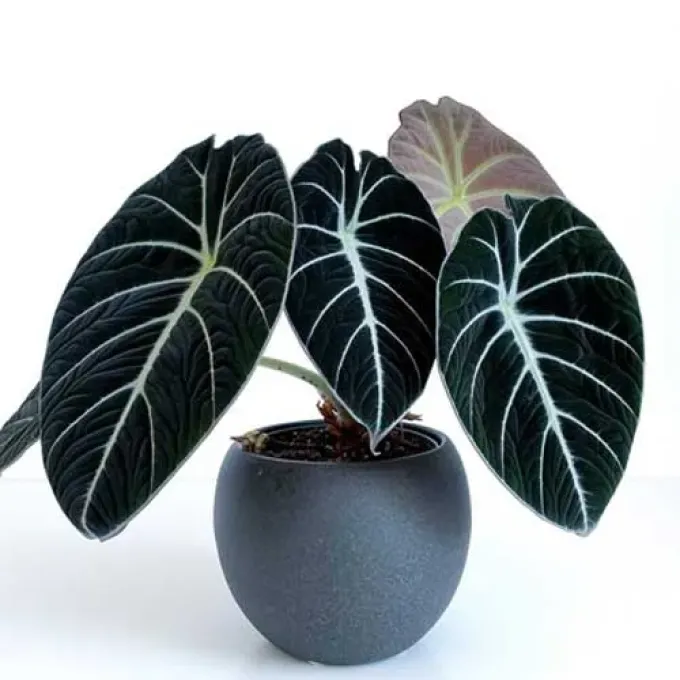
Description
Growing requirements
Alocasia reginula, popularly known as Black Velvet, is a small-sized member of the Araceae family. Originating from the limestone karst regions of Borneo, this species is highly valued for its dark, velvety foliage and striking silvery veins.
Successful cultivation requires a porous and well-aerated substrate that mimics its natural rocky habitat. A mixture involving orchid bark, perlite, and high-quality potting soil is ideal to ensure that the root system receives sufficient oxygen without lingering moisture.
The plant thrives in temperatures ranging from 20 to 26 degrees Celsius. It is essential to protect the specimen from cold drafts and significant temperature fluctuations, which can trigger dormancy or damage the delicate structure of the leaves.
Humidity is a critical factor for Alocasia reginula, requiring levels between 60 and 80 percent. Using pebble trays, humidifiers, or placing the plant in a greenhouse setting is highly recommended to prevent the edges of the leaves from crisping.
Lighting should be bright but filtered to prevent scorching the velvet leaf surface. Direct sunlight is highly detrimental to the plant, causing unsightly yellow patches and severe dehydration of the foliage in a matter of hours.
Main diseases and pests
Root rot, primarily caused by improper watering techniques and heavy soil, is the most common threat to this culture. If the substrate does not drain properly, the rhizome quickly succumbs to pathogens that result in sudden wilting and tissue collapse.
Pests such as spider mites and mealybugs are frequent visitors, especially in environments with poor air circulation or low humidity. These parasites sap the energy from the plant and cause stunting, necessitating immediate mechanical or chemical control.
Preventative care involves regular inspections of the underside of the leaves and maintaining a clean, dust-free foliage surface. Keeping the plant in a state of high vitality through balanced fertilization helps it better withstand potential pest infestations.
Bacterial spots may manifest as dark, water-soaked lesions on the leaves, usually appearing after periods of high humidity and low light. Removing affected leaves and adjusting the irrigation strategy is vital to preventing the spread of the infection to the rest of the plant.
Overall, maintaining a stable, tropical-like environment is the key to minimizing these threats. By prioritizing aeration, correct light exposure, and mindful water management, the plant will retain its characteristic dark velvet texture for many years.