
Giant taro
Alocasia macrorrhizos (L.) G. Don x A. odora (Lodd. et al.) Spach
Description
Growing requirements
Giant taro is a perennial herbaceous plant belonging to the Araceae family, originating from the tropical regions of Southeast Asia. It is widely cultivated across tropical and subtropical zones as a vital source of starch and a key component of traditional agricultural systems in many island nations.
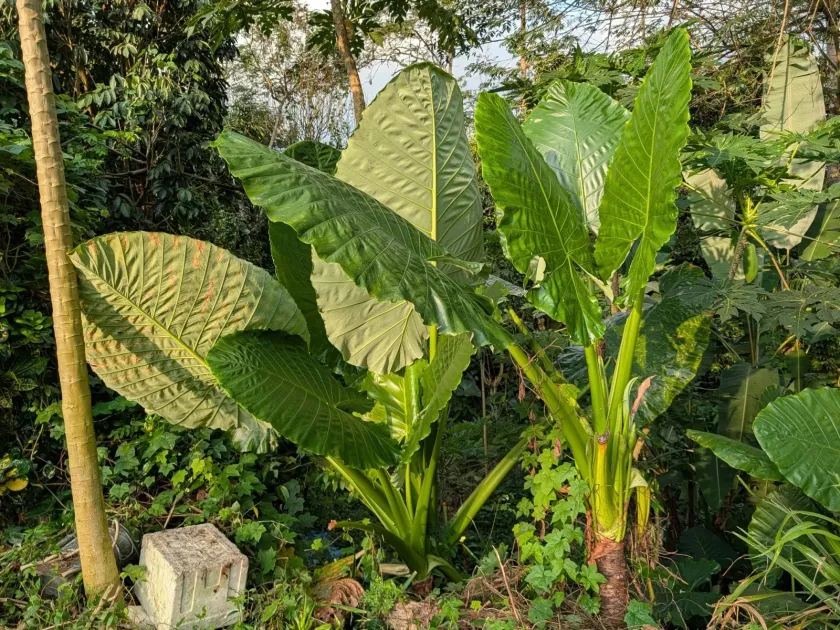
The plant is characterized by massive, arrow-shaped leaves and a thick, fleshy rhizome that serves as the primary edible part. Biologically, the plant is adapted to humid tropical climates with abundant rainfall, which ensures rapid development of the vegetative mass and substantial root accumulation.
Successful cultivation requires fertile, well-draining soils rich in organic matter. While the plant thrives in moisture, waterlogging must be avoided to prevent root diseases. Maintaining soil structure through organic amendments is essential for achieving high yields in commercial operations.
Agronomic practices for this crop focus on site selection with protection from high winds that can shred the large leaves. Planting is typically done in raised beds or well-prepared pits to ensure proper aeration and drainage, while regular weeding helps prevent resource competition in the early growth stages.
Climatic requirements are stringent, with an ideal temperature range between 22 and 30 degrees Celsius. The crop is intolerant to frost and cold snaps, which cause immediate tissue damage and metabolic arrest, effectively defining its range of cultivation to frost-free regions of the world.
Yield
The economic utility of the plant is centered on its starchy rhizomes, which are a dietary staple in many regions. Beyond human consumption, the plant is often integrated into local livestock feed systems, provided that proper heat treatment is applied to remove anti-nutritional compounds present in the raw tissues.
Main diseases and pests
The most significant threats to the crop include various fungal pathogens such as Pythium and Phytophthora, which cause root and crown rot in poorly drained areas. Pests like spider mites and aphids can also cause significant damage by depleting the sap of the broad leaves, leading to reduced photosynthetic capacity.
Harvesting
Harvesting is performed by manually lifting the rhizomes from the soil once the plant reaches physiological maturity. Post-harvest handling involves cleaning the produce and preparing it for immediate processing, as the raw rhizomes require cooking to break down calcium oxalate crystals before they become safe for consumption.