
Giant taro
Alocasia macrorrhizos (L.) G. Don
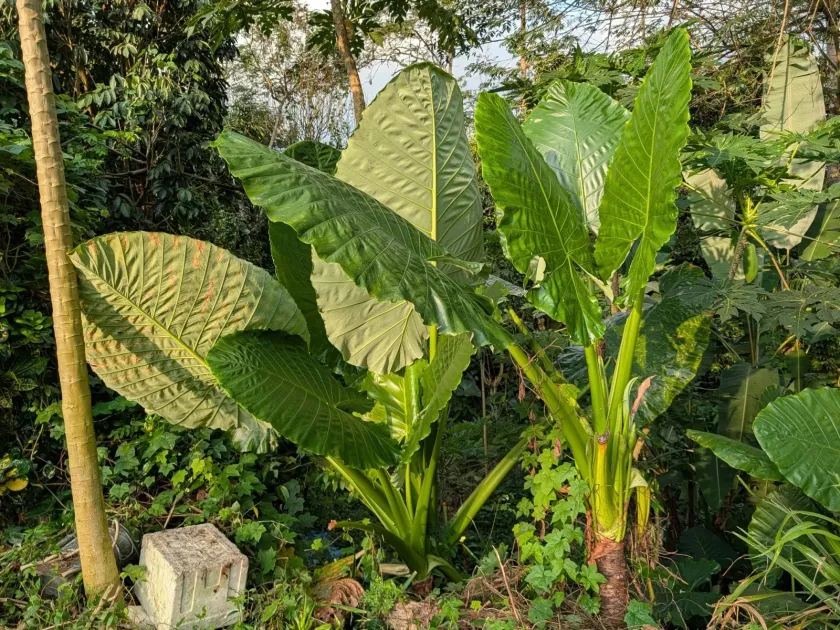
Description
Sowing dates
Giant taro is a tropical perennial plant commonly propagated through vegetative methods, specifically by dividing rhizomes or using lateral offsets produced by the parent plant.
For commercial cultivation, planting should be timed to coincide with the beginning of the rainy season to ensure optimal soil moisture levels for initial root establishment.
The plant thrives in regions without risk of frost; therefore, planting is restricted to tropical or subtropical climates where temperatures remain consistently warm throughout the year.
If utilizing seeds for propagation, they must be sown immediately after maturation in protected nurseries to maintain a temperature of at least 25 degrees Celsius.
Rhizomes are typically buried at a depth of 10–15 centimeters, which protects them from desiccation and promotes steady growth during the early developmental stages.
Growing requirements
Belonging to the Araceae family, this crop requires fertile, loose, and well-drained soils rich in organic matter to achieve maximum biological yield.
The plant exhibits high water requirements, making consistent moisture management essential; however, it is sensitive to waterlogging, which can trigger rot in the root system.
An ideal temperature range for active growth is between 20 and 30 degrees Celsius; exposure to temperatures below 15 degrees Celsius inhibits metabolic processes.
Giant taro prefers shaded or semi-shaded environments, as intense direct sunlight can scorch the large leaf blades and reduce the overall photosynthesis rate.
- High relative air humidity (above 70%).
- Protection from high winds to prevent mechanical damage to leaves.
- Regular nitrogen-based fertilization to support leafy mass development.
Yield
The primary agricultural value of this crop lies in its large, starch-rich rhizomes, which serve as a staple carbohydrate source in many tropical regions.
The growth cycle from planting to harvest typically lasts between 12 to 18 months, depending on the cultivar and the environmental conditions provided.
Yield performance is highly correlated with the quality of soil preparation and the availability of essential macro-nutrients during the peak growing season.
Well-managed plantations can yield significant quantities of edible biomass per hectare, provided that pests and diseases are effectively controlled.
Harvesting is performed once the aerial parts begin to senesce and yellow, indicating that the starch reserves in the rhizome have reached their peak levels.
Main diseases and pests
Root rot is the most serious threat to Giant taro, typically triggered by stagnant water and poor soil drainage, particularly during cooler periods.
Insect pests, including spider mites and mealybugs, can cause significant damage by feeding on the sap, leading to leaf deformation and overall plant stress.
Fungal leaf spot diseases may develop under conditions of high humidity and poor air circulation, necessitating frequent monitoring of the foliage.
Effective management involves the use of systemic insecticides and fungicides, alongside cultural practices such as removing infected leaves to prevent disease spread.
Preventative measures like crop rotation and the selection of disease-free propagation material are crucial to maintaining the health and productivity of the crop.