
Alocasia Putzeysii
Alocasia longiloba x Alocasia sanderiana
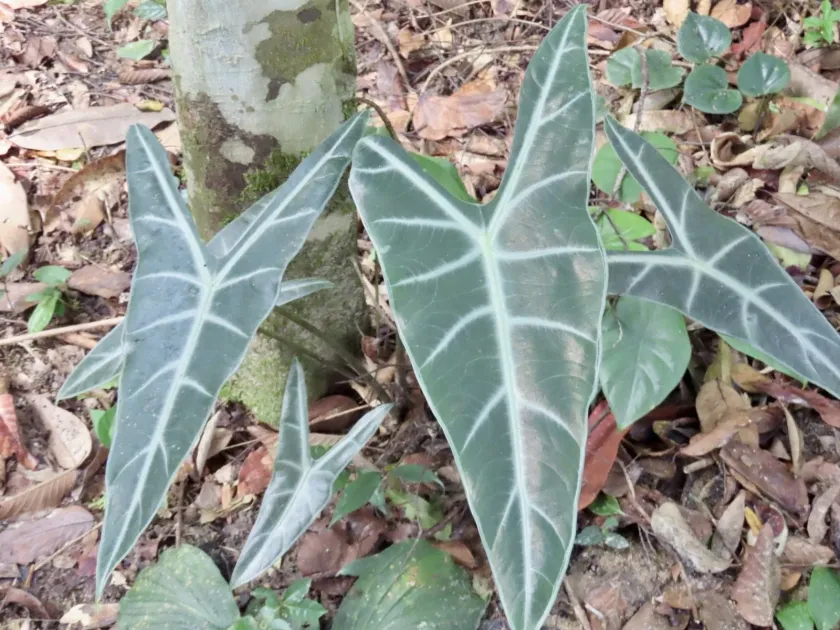
Description
Growing requirements
Alocasia Putzeysii (Alocasia longiloba x Alocasia sanderiana) is a distinctive member of the Araceae family, recognized for its elegant, dark-foliaged appearance with contrasting venation. This hybrid thrives best in controlled indoor environments that replicate its native Southeast Asian rainforest habitat.
The crop requires a strictly tropical climate with consistent temperatures ranging from 22°C to 28°C. It is highly intolerant of cold drafts or sudden thermal shocks, which frequently result in leaf yellowing and the cessation of growth, especially during winter months.
The substrate must be highly porous and well-draining, as the root system of this species is prone to rot in waterlogged conditions. A professional potting mix should consist of bark chips, perlite, horticultural charcoal, and high-quality peat to ensure proper aeration and drainage.
Regarding light, this Alocasia species prefers bright, filtered sunlight. Exposure to direct midday sun is highly discouraged, as it causes rapid desiccation of the leaf tissue and permanent necrotic spotting, significantly diminishing the market value of the plant.
Hydration management is essential; the plant requires high relative humidity levels of at least 70% to maintain its turgidity. Irrigation should be performed only when the top few centimeters of the substrate have dried, preventing the risk of anaerobic conditions developing around the rhizome.
Main diseases and pests
The most prevalent pests affecting Alocasia Putzeysii in cultivation are spider mites and mealybugs. These pests thrive in dry environments and can cause severe damage to the foliage, often requiring immediate intervention with insecticidal soaps or horticultural oils to prevent infestations.
Root rot, driven by Phytophthora or Pythium species, is the most common pathological issue caused by poor drainage or overwatering. Effective disease management involves sterile propagation techniques, proper substrate sanitation, and the application of specialized systemic fungicides when symptoms appear.