
Alocasia lauterbachiana
Alocasia lauterbachiana (Engl.) A. Hay
Description
Growing requirements
Alocasia lauterbachiana is an ornamental tropical perennial belonging to the Araceae family. Native to the rainforests of New Guinea, this species thrives in understory conditions, where it is protected from direct sunlight and benefits from consistently high ambient humidity levels.
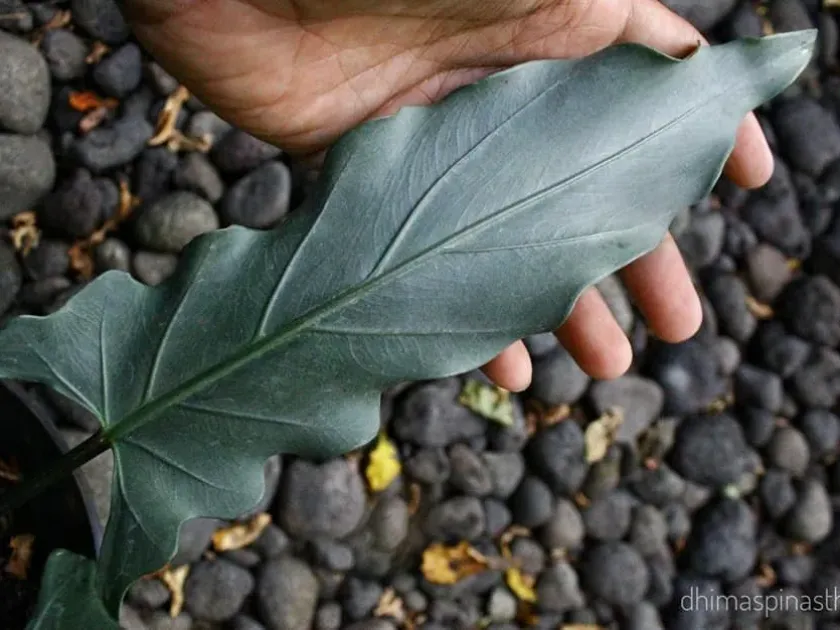
The plant is botanically distinguished by its elongated, lance-shaped leaves with wavy, crenulated edges. A key identifying feature is the striking contrast between the dark green upper surface and the deep reddish-purple coloration on the underside of the leaf, supported by a sturdy central petiole.
Successful cultivation requires maintaining an environment with temperatures ranging from 20°C to 26°C. The plant demands high atmospheric humidity and is extremely sensitive to cold drafts, which can cause significant stress, yellowing of the foliage, and stunted growth.
The soil requirements focus on achieving excellent aeration and drainage. A standard potting mix should include organic materials like peat moss or coconut coir, mixed with perlite or pine bark to ensure that roots are not kept in a permanently saturated, anaerobic environment.
In terms of agricultural use, this plant is cultivated primarily for its high ornamental value. It is widely produced for the nursery trade to be used in indoor landscaping, high-end office environments, and botanical garden displays, where its exotic aesthetic is highly sought after.
Main diseases and pests
The most significant threats to Alocasia lauterbachiana are fungal pathogens, specifically those causing root and stem rot. These diseases are almost exclusively triggered by improper watering practices, such as allowing water to sit in the pot or using a poorly drained medium.
Pest pressure is primarily driven by sap-sucking insects. Spider mites are the most common issue, especially during the winter or in dry climates, as they thrive in low-humidity conditions and can quickly defoliate the plant if not detected early.
Mealybugs and scale insects also present a frequent challenge, often colonizing the crevices of the petioles and the undersides of the leaves, where they remain protected from manual removal and contact pesticides.
Control strategies for these pests emphasize the importance of early detection through routine inspection and the maintenance of optimal humidity, which naturally discourages most spider mite outbreaks.
If chemical intervention is required, systemic insecticides or horticultural oils may be used. However, it is essential to perform a small-scale sensitivity test on the leaves before a full application, as the delicate foliage of the Alocasia genus can be sensitive to certain chemical additives.