
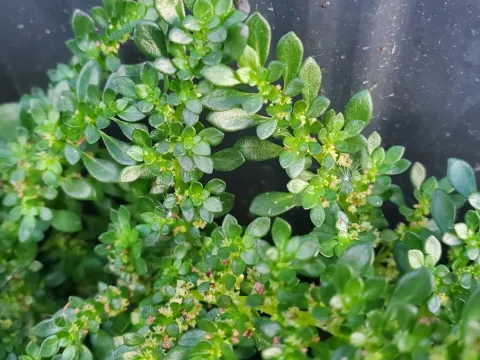
Artillery plant
Pilea microphylla
The artillery plant (Pilea microphylla) belongs to the Urticaceae family. It is a succulent, branching herb characterized by tiny, bright green leaves that give it a fern-like or mossy appearance.
What the section contains
Artillery plant
The common name, artillery plant, derives from its unique mechanism of expelling pollen in small, explosive puffs when the plant is disturbed or when humidity levels change rapidly.
It possesses a shallow, fibrous root system that allows it to thrive in the limited substrate volume of nursery pots and on the surface of damp greenhouse benches.
Stems are fleshy and fragile; however, they can easily root at the nodes if they come into contact with moist soil, facilitating rapid vegetative propagation alongside seed dispersal.
The plant is notoriously difficult to spot in its early stages of growth, often mimicking moss, which allows it to establish significant populations before being identified by growers.
Native to tropical regions of the Americas, Pilea microphylla has become a widespread invasive weed in greenhouses and nurseries throughout temperate climate zones.
It favors warm, humid environments with consistent moisture, making modern greenhouses the ideal habitat for its aggressive colonization of growing media.
The plant frequently inhabits the surface of potting soil, cracks in concrete floors, and irrigation drainage systems, where it creates a dense, persistent ground cover.
Because its seeds are microscopic and dust-like, they are easily dispersed by ventilation fans, water spray, and even the movement of greenhouse staff, leading to rapid spread across growing areas.
It is capable of growing in both low-light and bright-light conditions, showing extreme adaptability to various greenhouse microclimates.
The primary harm caused by Pilea microphylla is its aggressive competition with crop plants for water, nutrients, and physical space within the containers.
By creating a dense, moisture-retaining mat on the soil surface, the weed impedes air circulation to the roots, often exacerbating conditions for fungal pathogens and root rots.
The weed acts as a host and refuge for various greenhouse pests, including fungus gnats and spider mites, which can easily cycle populations within its thick growth.
Heavy infestations reduce the aesthetic value of ornamental plants, leading to marketability issues and increased labor costs for manual weeding and maintenance.
In seedlings and young plant production, the artillery plant can completely overwhelm and smother the primary crop, resulting in significant yield losses.
Effective control requires a proactive approach centered on greenhouse sanitation and the elimination of the weed before it reaches the reproductive flowering stage.
Cultural management involves using sterile potting media and maintaining precise irrigation to avoid keeping the soil surface constantly saturated, which deters germination.
Surface mulching with grit, sand, or landscape fabric is an highly effective method to prevent the seeds of the artillery plant from reaching the soil and germinating.
Chemical control is complicated in active production due to potential phytotoxicity to the crop; herbicides are typically reserved for non-crop area maintenance or empty greenhouse disinfection.
- Practice strict sanitation of all tools and benches to prevent spread.
- Install fine-mesh screening on vents to reduce seed entry.
- Manually remove the weed as soon as identified, ensuring root extraction.
- Manage irrigation to minimize standing water on benches.