
Parietaria praetermissa
Parietaria praetermissa
Description
How to tell it apart
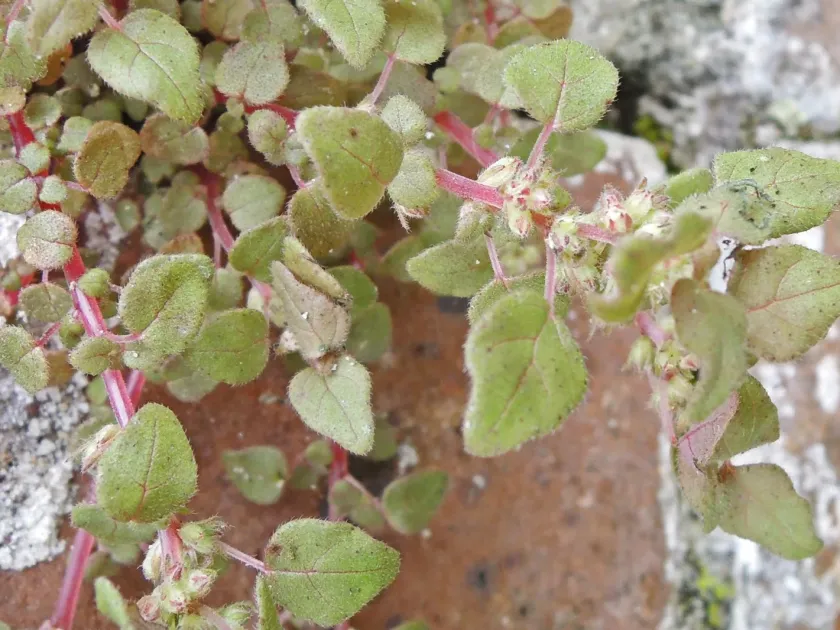
Parietaria praetermissa is an annual herbaceous plant belonging to the Urticaceae (Nettle) family. Unlike common nettles, this species lacks stinging hairs, making it less physically abrasive but equally invasive.
The plant features branched, often procumbent or ascending stems that can spread quickly across the ground. Leaves are simple, alternate, and entire, typically showing an ovate to lanceolate shape with a smooth margin.
Flowers are small, inconspicuous, and greenish, appearing in axillary clusters. Because the plant relies on wind for pollination, it produces significant amounts of pollen, which is known to be allergenic.
Its root system is fibrous and relatively shallow, which allows it to thrive in compacted or nutrient-rich soils. The seeds are small and dark, designed for efficient dispersal by wind and water across agricultural fields.
Agronomists identify the species by examining the bracts surrounding the flowers, which possess distinct morphological characteristics that set it apart from other members of the Parietaria genus.
Where it grows
This weed prefers shaded and moist microclimates. It is commonly found in proximity to irrigation lines, orchard edges, gardens, and in the shaded rows of dense field crops like corn or vegetables.
Parietaria praetermissa is highly adaptable to various soil types, ranging from sandy loams to rocky substrates, provided there is a sufficient supply of nitrogen and moisture for rapid growth.
It frequently colonizes areas with high anthropogenic activity, such as fence lines, neglected plots, and edges of farm structures, which act as primary reservoirs for weed seeds.
In regions with mild winters, the plant exhibits extended growing cycles, potentially producing multiple generations in a single year, which significantly increases the pressure on cultivated crops.
The weed often exploits the open spaces in newly established crops, filling the ecological niche left by the slow initial growth of the primary commodity before it achieves full canopy closure.
##harm##The primary damage caused by Parietaria praetermissa is intense resource competition. It rapidly draws nitrogen and water from the soil, directly impacting the development of cash crops during critical stages.
Dense mats of the weed create significant shading, which reduces the light interception efficiency of young crop plants, leading to stunted growth and lower biomass production in the affected areas.
The plant acts as a host for various pathogens and pests, including aphids and fungi. These can easily transition from the weed to cultivated plants, complicating disease management strategies.
Large populations of the weed can interfere with mechanical harvesting and cultivation processes, clogging farm equipment and increasing the time and fuel required for field maintenance.
Furthermore, the high pollen production can pose a health risk to farm workers, as Parietaria species are widely recognized as primary causes of respiratory allergies in agricultural settings.
How to control
Integrated weed management begins with cultural practices such as crop rotation, which breaks the lifecycle of the weed. Deep tillage before sowing can bury seeds, preventing germination.
Timely mechanical cultivation between crop rows is effective for uprooting the weed before it sets seed. This is especially important in early spring to prevent population expansion during the season.
Chemical control is performed using selective herbicides suitable for the specific crop variety. It is crucial to target the weed when it is in the seedling or vegetative stage for best results.
In orchards and perennial systems, non-selective systemic herbicides can be used as part of a targeted program to keep the under-tree canopy free of weed competition without harming the woody plants.
Regular sanitation of non-crop areas, including field perimeters and irrigation ditches, is essential to minimize the seed bank and reduce the annual re-infestation pressure on the main field.
Taxonomy
- Latin name
- Parietaria praetermissa
- Family
- Крапивные
- EPPO code
- PAIPR