
Pilea fontana
Pilea fontana
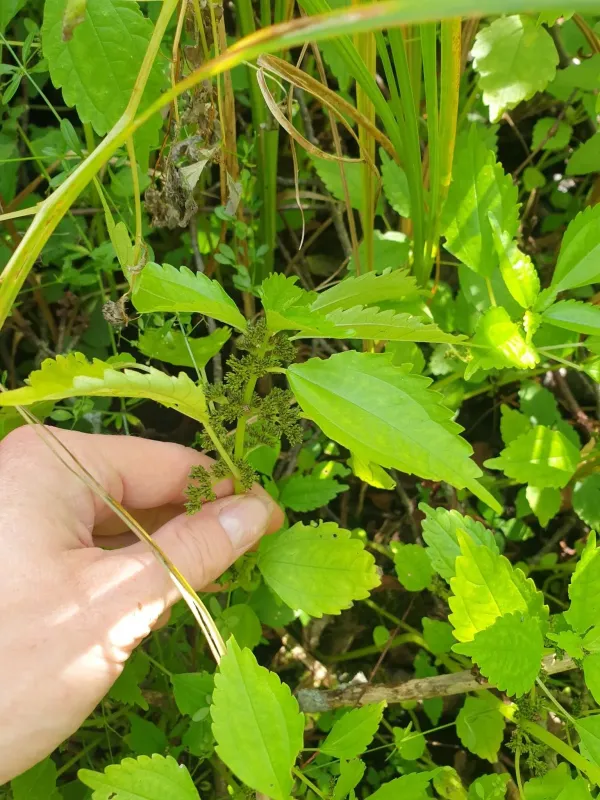
Description
How to tell it apart
Pilea fontana, commonly known as the fountain pilea or lesser clearweed, is an annual herbaceous plant belonging to the Urticaceae family. It is a succulent-stemmed plant that can grow up to 30 centimeters in height.
The leaves are opposite, ovate in shape, and feature distinct serrated margins. The stems are often translucent or watery, which is a signature characteristic of this species.
Flowers are tiny and greenish, organized in axillary clusters. Unlike its close relatives, the stinging nettles, this plant does not have stinging hairs, which makes it distinct during physical inspection.
The root system is fibrous and shallow, typical for plants that thrive in high-moisture environments. It lacks deep taproots, making the plant relatively easy to uproot manually.
Identification often relies on the observation of its succulent, semi-transparent stems and its preference for damp soil conditions where other, more robust weeds might struggle.
Where it grows
This weed is predominantly found in moist, shaded environments such as riverbanks, drainage ditches, wetlands, and damp edges of agricultural fields.
In farming, it often colonizes low-lying areas of a field where water tends to pool after rain, creating an ideal micro-habitat for the species to establish itself.
Pilea fontana is also a frequent invader in greenhouse environments and nurseries where frequent irrigation and controlled high humidity mimic its natural habitats.
The species can spread rapidly from adjacent unmanaged areas, such as forest borders or irrigation canals, into the cultivated fields if left unchecked by proper maintenance.
It prefers areas with high organic matter content in the soil, which supports its fast growth rate during the spring and summer months.
Harm it causes
The primary damage caused by Pilea fontana is its competition with crops for water and nutrients, which can be particularly detrimental in the early growth stages of seedlings.
Its tendency to form dense, mat-like colonies can physically crowd out crop plants, leading to reduced sunlight penetration and restricted growth space.
The dense foliage of this weed traps moisture near the soil surface, which often creates an environment conducive to the spread of fungal diseases among crops.
In intensive cultivation, its presence necessitates extra labor for weeding, increasing the overall cost of crop maintenance and potentially damaging crop roots during mechanical removal.
If uncontrolled, its high reproductive rate allows it to dominate field edges and damp zones, eventually spreading and reducing the overall quality and uniformity of the harvest.
How to control
Improving field drainage is the most effective long-term strategy for managing Pilea fontana, as it strictly requires high moisture levels for sustained growth.
Regular mechanical cultivation of inter-row spaces is effective in suppressing populations during the early vegetative phase, preventing the weed from flowering and setting seeds.
Mulching is a highly recommended practice for horticultural crops, as it denies the weed the light necessary to germinate and establish its shallow root system.
Chemical control via selective herbicides should be applied according to the specific crop registration, ideally during the early post-emergence stage when the weed is most vulnerable.
Integrated weed management, including crop rotation and maintaining clean buffer zones around fields, is essential for minimizing the re-emergence of this species in cultivated areas.
Taxonomy
- Latin name
- Pilea fontana
- Family
- Крапива двудомная
- EPPO code
- PILFO