
Hesperocnide sandwicensis
Hesperocnide sandwicensis
Description
How to tell it apart
Hesperocnide sandwicensis is a member of the Urticaceae family. It is a small, annual herb that can easily be overlooked due to its modest size and non-aggressive appearance compared to other nettle-like plants.
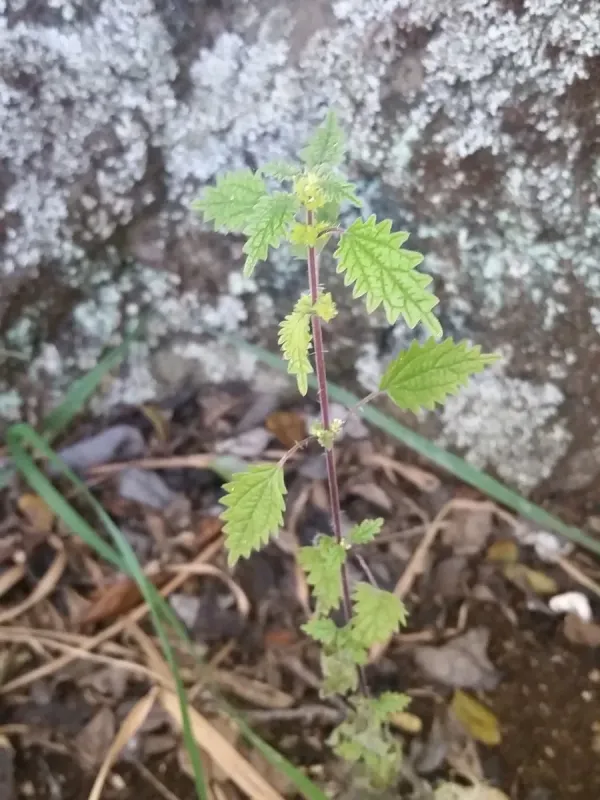
The plant typically grows to a height of 10–30 centimeters. It features thin, branched stems and opposite leaves that are oval or rounded with serrated margins, characteristic of the nettle family.
Its flowers are tiny, greenish, and inconspicuous, hidden in the leaf axils. Because they lack showy petals, they often go unnoticed until the plant has fully established itself in the field.
The fruit is a small achene that can be easily dispersed by wind and water, aiding in the rapid spread of the species within suitable environments.
Distinguishing Hesperocnide from other related species requires careful observation of its floral structure and overall habitat, as it occupies a specific niche within the Hawaiian ecosystem.
Where it grows
Hesperocnide sandwicensis is native to the Hawaiian Islands. It thrives in shaded, moist environments, frequently occurring in the understory of forests and on nutrient-rich slopes.
In agricultural settings, this weed colonizes abandoned fields, orchards, and gardens where the soil moisture remains high and the natural vegetation cover has been disturbed.
The plant demonstrates a preference for disturbed ground, including roadsides and agricultural boundaries, where it quickly outcompetes weaker local plant species.
It adapts well to sheltered locations, making it a persistent nuisance in areas protected from direct sunlight, such as greenhouse perimeters or dense crop canopies.
Its ability to tolerate varied light conditions allows it to establish itself in diverse agricultural landscapes across the islands, becoming a challenge for local farmers.
Harm it causes
The primary harm caused by Hesperocnide sandwicensis is its competitive nature. It competes with crops for essential nutrients, water, and space, often suppressing the growth of young seedlings.
Because it forms dense patches, it can create a thick ground cover that makes it difficult for desirable crops to access the soil and light they need for healthy development.
As a member of the nettle family, it may serve as a reservoir for certain plant diseases or pests, potentially increasing the risk of infection for neighboring vegetable crops.
The high seed production of the plant leads to the accumulation of a significant seed bank in the soil, ensuring that the weed returns in subsequent seasons if not managed properly.
The presence of this weed increases labor requirements for weeding and maintenance, ultimately reducing the overall yield and economic efficiency of the affected agricultural operations.
How to control
Effective control of Hesperocnide sandwicensis involves a multi-faceted approach, starting with deep tillage to bury seeds and prevent germination, which is critical for long-term management.
Manual removal is effective when done early in the season, before the plants reach the seed-bearing stage, ensuring that the entire root system is pulled to prevent regrowth.
In larger fields, the application of selective herbicides that target broadleaf weeds is a common and efficient strategy, provided the safety of the main crop is maintained.
Improving field hygiene, such as clearing irrigation channels and maintaining clean borders, helps to restrict the movement of seeds and limits the re-infestation of cultivated lands.
Incorporating crop rotation and mulching techniques can create conditions unfavorable for the growth of this weed, making it harder for the population to become established.
Taxonomy
- Latin name
- Hesperocnide sandwicensis
- Family
- Крапивные
- EPPO code
- HEXSA