

Description
How to tell it apart
Common dandelion (Taraxacum officinale) belongs to the Asteraceae family. It is a perennial herbaceous plant distinguished by a deep, fleshy taproot that is highly resilient.
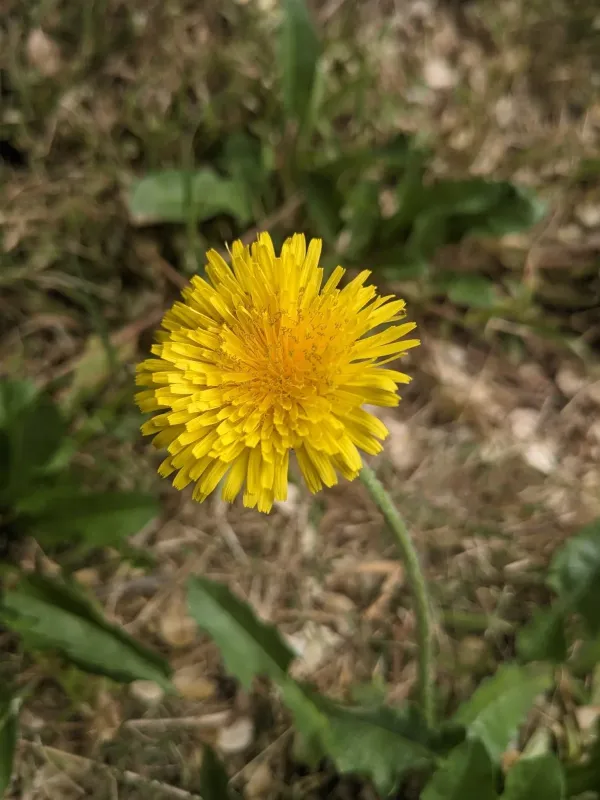
The plant features a basal rosette of deeply lobed, toothed leaves. Its hollow, leafless flower stalks produce solitary bright yellow flower heads that develop into globose seed clusters.
Reproduction occurs primarily via wind-dispersed seeds equipped with a pappus. However, the plant can also regenerate from small root fragments left in the soil after mechanical disturbance.
A diagnostic characteristic is the presence of bitter, milky latex that exudes from any part of the plant when damaged, serving as a reliable identification marker.
This species is highly adaptive, thriving in various light conditions and soil types, which contributes to its status as a persistent and difficult-to-eradicate agricultural weed.
Where it grows
Dandelions are ubiquitous, growing in fields, pastures, orchards, and along roadsides. They prefer nutrient-rich, moist soils but can adapt to a wide range of environmental conditions.
In agricultural settings, they are particularly problematic in perennial grass stands and winter cereals. They often invade areas where soil management is inconsistent or where crops are struggling.
The plant demonstrates high tolerance to soil compaction, allowing it to dominate pastures and meadows where heavy livestock grazing has reduced the cover of more desirable forage species.
Untilled field margins act as reservoirs for seeds, which are easily transported by wind into cultivated areas, ensuring a continuous re-infestation of the fields each season.
Their ability to establish rapidly in open spaces allows them to outcompete crops during the early spring when the dandelion begins its aggressive regrowth from the dormant taproot.
Harm it causes
The primary economic harm stems from direct competition for light, water, and soil nutrients. The deep taproot can effectively mine resources that are crucial for developing crops.
In pastures, dandelion growth displaces higher-quality fodder grasses, leading to reduced overall livestock performance and decreased nutritional value of harvested hay.
In winter cereal production, dandelion rosettes that overwintered begin active growth early in the season, suppressing crop tillering and resulting in significant yield losses.
Dandelions often host secondary pests and plant pathogens, serving as a bridge for diseases to spread from wild areas into productive agricultural crops.
Contamination of the harvested grain with dandelion seeds reduces the market grade of the product and necessitates expensive additional cleaning processes post-harvest.
How to control
Mechanical control focuses on deep tillage and plowing, which are effective in severing the taproot and exhausting the plant's food reserves before it can establish a large rosette.
Maintaining a balanced crop rotation and utilizing competitive cover crops can suppress dandelion establishment by limiting the light available for rosette development.
Chemical control involves the use of systemic herbicides, particularly those targeting broadleaf weeds, applied during the active growth stage of the rosette before the flowering phase.
Early intervention is crucial because once the plant reaches the flowering or seed-bearing stage, herbicide efficacy decreases and the weed risk for the next season increases.
- Deep plowing to destroy root systems;
- Mowing field margins to prevent seed dispersal;
- Selective herbicide application during the rosette stage;
- Use of clean, certified crop seeds.
Content graph
Connections · Dandelion
Most often together:
Marketplace
Products · 26

Dublon Gold
ЗАТ Фірма Август, Росія.,селище Вурнари,
Herbicides
2
2
·
5.4K
6 offers
117.01 €per 1 l
Buy

Otaman
Wuxi Longbang Chemical & Industrial Co., Ltd.
Herbicides
0
0
·
4.6K
17 offers
0.47 €per 1 l
Buy


Galera 334 SL
Доу АгроСайенсіс С.А.С., Друзенхайм, Франція
Herbicides
0
0
·
2.6K
4 offers
14.25 €per 1 l
Buy


STARNE@ Premium 330 EC
Доу АгроСайенсіс С.А.С., Друзенхайм, Франція
Herbicides
0
0
·
52
4 offers
6.84 €per 1 l
Buy


Maxstar
ТОВ «Фабрика агрохімікатів», Черкаси, Україна
Herbicides
0
0
·
31
1 offer
14.06 €per 1 l
Buy

Prima Forte
Доу АгроСайенсіс С.А.С., Друзенхайм, Франція
Herbicides
0
0
·
24
4 offers
2.7 €per 1 l
Buy


Biology
Taxonomy
- Latin name
- Taraxacum officinale
- Family
- Многолетние двудольные