

Dublon Gold
ЗАТ Фірма Август, Росія.,селище Вурнари,
Herbicides
2
2
·
5.4K
6 offers
117.01 €per 1 l
Buy
Scleranthus annuus
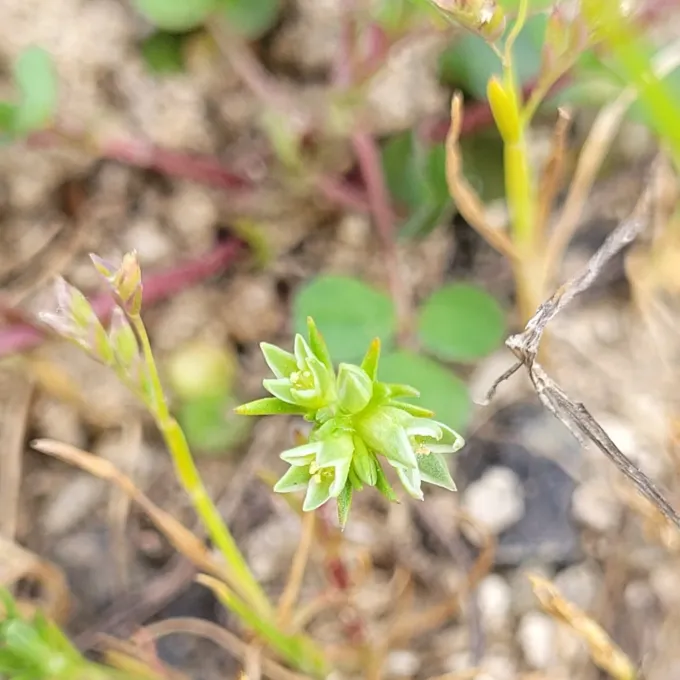
Annual knawel is a low-growing, branched herb that typically reaches heights of 5 to 15 centimeters, often forming dense, mat-like patches.
The leaves are linear, awl-shaped, and arranged in opposite pairs, frequently clustered at the nodes, giving the plant a distinctive tufted appearance.
The flowers are small, greenish, and lack petals, clustered together in tight terminal or axillary bundles that look like prickly, rounded nodes.
It possesses a thin, taproot system that enables the plant to thrive in nutrient-poor and acidic conditions where other plants may struggle.
The fruit is a dry, single-seeded nutlet that remains enclosed within the persistent calyx, facilitating efficient dispersal by wind or water.
This weed is commonly found in sandy, acidic, and well-drained soils, often acting as a bioindicator for low-fertility agricultural land.
It frequently invades winter cereal crops, fallow fields, and open, disturbed habitats such as roadsides or gravelly paths.
Annual knawel prefers open sunlight and does not tolerate significant shading from taller vegetation, which explains its prevalence in thinly sown crops.
It can withstand harsh environmental conditions and is often one of the first weeds to colonize depleted or eroded soils in the spring.
Due to its resilience, it can persist in diverse climatic regions, spreading rapidly if the soil chemistry remains favourable for its growth.
Annual knawel competes aggressively with young crops for essential nutrients, particularly nitrogen, and moisture in the early stages of plant growth.
In cereal production, it can inhibit the tillering process of wheat and barley, ultimately leading to reduced grain quality and lower overall yields.
The weed's presence complicates field operations and its seeds can be difficult to screen out from harvested grain, affecting marketability.
By forming dense patches, it suppresses the emergence and vigor of neighboring crop seedlings, creating bare spots in the field.
The species contributes to the weed seed bank in the soil, which necessitates long-term management strategies to prevent persistent annual infestations.
Liming acidic soils is one of the most effective long-term strategies, as annual knawel is highly sensitive to changes in soil pH levels.
Improved crop nutrition and soil fertility management can help the primary crop outcompete the weed, significantly reducing its spread.
Mechanical control through timely hoeing and deep plowing during seedbed preparation helps destroy young seedlings before they establish.
Chemical control using approved selective herbicides can be effective, provided they are applied during the early growth stages of the plant.

