
Buckshorn plantain
Plantago coronopus
Description
How to tell it apart
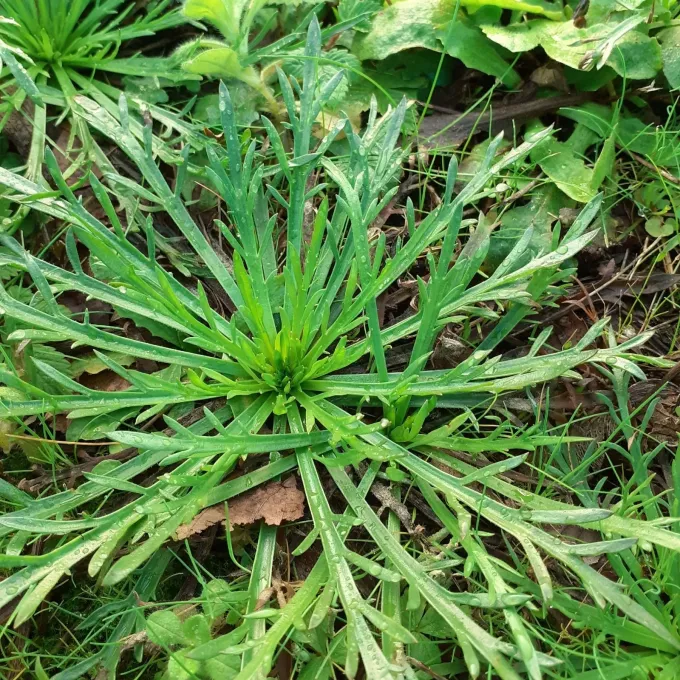
Buckshorn plantain (Plantago coronopus) is a herbaceous plant belonging to the Plantaginaceae family, characterized by a basal rosette of leaves.
The leaves are distinctly pinnate or deeply lobed, which gives the plant its unique appearance compared to other broad-leaved plantain species.
The inflorescence consists of a dense, cylindrical spike located on a long stalk that can grow up to 25 centimeters in height.
It possesses a strong taproot that allows the plant to thrive in compacted, dry, or saline soils where other plants might struggle.
The flowers are very small and inconspicuous, packed closely together on the spike, typical for the genus Plantago.
Where it grows
This weed is commonly found in open, disturbed areas, including coastal regions, gravel pits, and roadside verges.
In agricultural settings, it often colonizes compacted soil and areas with poor drainage, where crop emergence might be suboptimal.
It is frequently observed in pastures and grasslands, showing a high tolerance for grazing pressure and foot traffic from livestock.
The plant demonstrates high ecological plasticity, allowing it to adapt to various moisture levels and soil types across different regions.
Its presence in fields often indicates soil compaction issues caused by heavy agricultural machinery during previous seasons.
Harm it causes
Buckshorn plantain causes harm by competing with valuable forage or crops for essential soil nutrients, water, and sunlight space.
In pastures, it reduces the yield and nutritional quality of hay, making it an undesirable component for grazing livestock diets.
The weed's rosette growth form allows it to thrive in gaps, preventing the establishment of a dense, productive crop canopy.
Its ability to produce large amounts of seeds ensures a rapid spread across fields if not managed properly during the growing season.
Mechanical damage to crop roots or nutrient uptake competition can lead to a measurable reduction in overall agricultural output.
How to control
Effective control requires a multi-faceted approach, starting with deep tillage to physically destroy the root systems of established rosettes.
Improving soil structure through aeration or subsoiling can reduce the competitive advantage that this weed has over desired crop species.
Crop rotation that includes vigorous competitors is a reliable way to naturally suppress the germination and growth of plantain.
- Manual weeding or mechanical cultivation in rows for small-scale operations.
- Systemic herbicide application in non-crop areas to prevent seed bank replenishment.
Regular maintenance of field margins and paths is crucial to eliminate sources of infestation that could spread seeds into the main production area.
Taxonomy
- Latin name
- Plantago coronopus
- Family
- Подорожник большой
- EPPO code
- PLACO