
Ambulia
Limnophila sessiliflora
Description
How to tell it apart
Limnophila sessiliflora, commonly known as Ambulia, belongs to the Plantaginaceae family and is recognized as a persistent aquatic weed.
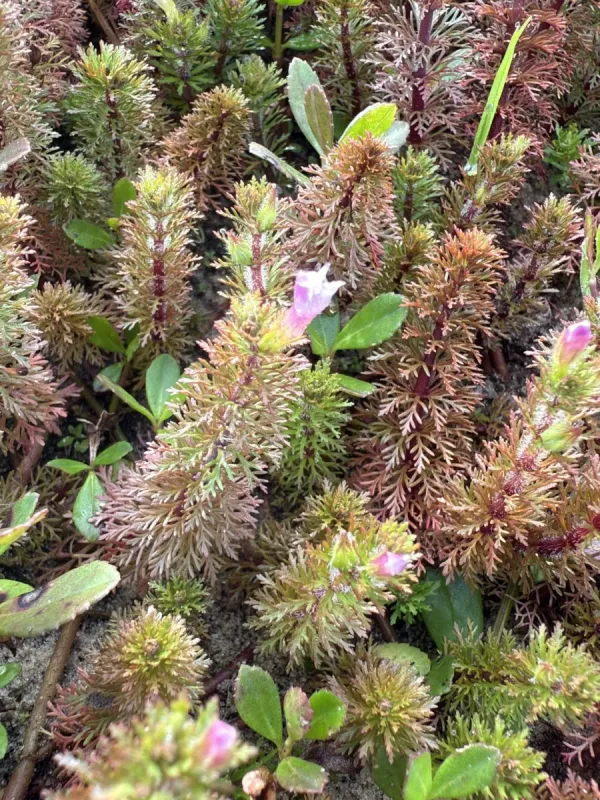
The plant is characterized by whorled leaves that are deeply dissected into delicate, thread-like segments, giving the plant a fern-like appearance.
Its stems are erect and often submerged, typically reaching heights of 30–50 centimeters under optimal growing conditions.
Flowers are small, sessile (lacking stalks), and appear in leaf axils, which is a definitive feature distinguishing it from other aquatic species.
Ambulia is highly aggressive due to its ability to propagate via stem fragments, allowing it to rapidly colonize flooded environments.
Where it grows
This weed is native to tropical and subtropical regions, but it has become a significant problem in rice-growing agricultural systems.
It thrives in stagnant or slow-moving freshwater environments, including irrigation ditches, canals, and flooded rice paddies.
The species prefers silty or sandy substrates and is highly tolerant to variations in light intensity within the aquatic ecosystem.
Irrigation systems facilitate the spread of Ambulia fragments, which can quickly establish new populations in rice fields.
It occupies the same ecological niche as young rice plants, leading to direct competition for resources shortly after transplanting.
Harm it causes
The primary harm caused by Limnophila sessiliflora is the suppression of young rice seedlings, which struggle to compete with its rapid growth.
By consuming excessive nutrients from the water and soil, the weed reduces the available resources for the rice crop, stunting its growth.
The dense mats formed by this species shade out submerged or floating rice leaves, inhibiting photosynthesis and overall plant health.
In irrigation networks, the weed creates significant blockages, reducing water flow and causing sedimentation in essential canals.
Farmers face economic losses due to decreased grain quality and quantity, with severe infestations reducing yields by up to 25 percent.
How to control
Effective management includes precise water level control in paddies, such as temporary drainage, which can stress the weed while allowing rice to recover.
Preventative measures involve cleaning irrigation canals and removing vegetative debris before the main planting season begins.
Mechanical harvesting of the weed in large channels is necessary to maintain proper water flow to the rice paddies.
Chemical control utilizes selective herbicides approved for use in aquatic environments and rice paddies to target the weed without harming the crop.
- Monitor water sources for the presence of stem fragments.
- Maintain consistent field monitoring during the early stages of rice growth.
- Use certified, clean seeds to prevent weed introduction.
Taxonomy
- Latin name
- Limnophila sessiliflora
- Family
- Подорожник большой
- EPPO code
- LIOSE