
Native bindweed
Convolvulus erubescens
Description
How to tell it apart
Native bindweed, known scientifically as Convolvulus erubescens, is a perennial herbaceous plant belonging to the Convolvulaceae family. It is recognized by its trailing or climbing stems.
The stems and leaves often display a reddish tinge, which is a key identifying feature of the species, distinguishing it from other common bindweed varieties.
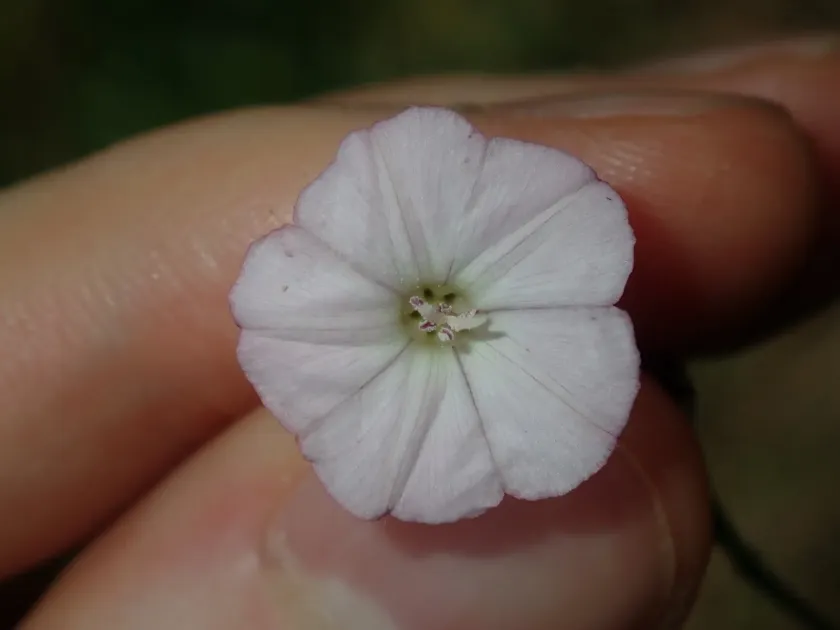
The flowers are typically funnel-shaped, appearing in shades of white to pink, and are characteristic of the morning glory family to which it belongs.
It possesses a deep, extensive root system that allows it to survive in various soil types and withstand prolonged periods of drought.
The plant reproduces both through seeds and by vegetative spread from its complex underground network of rhizomes.
Where it grows
This weed thrives in open, sunny environments and is commonly found in grasslands, pastures, and disturbed areas across its native range.
In agricultural settings, it frequently infests crop fields, fence lines, and areas surrounding farm infrastructure where soil has been disturbed.
Native bindweed adapts well to different soil textures, ranging from sandy loams to heavier clay soils, provided there is adequate light.
It is particularly problematic in areas that lack consistent ground cover, as it quickly occupies open patches of soil using its vigorous growth habit.
Its ability to propagate from small root segments makes it difficult to eradicate, especially in fields managed with frequent mechanical cultivation.
Harm it causes
The primary damage caused by Native bindweed is the severe competition with crops for water, nutrients, and sunlight, which can significantly reduce final yields.
Due to its twining nature, it wraps around crop stems, causing them to lodge, which makes mechanical harvesting difficult and increases grain loss.
The dense foliage of the weed can shade out smaller or slower-growing crop seedlings, hindering their development during critical stages.
It can also act as a host for various agricultural pests and diseases, providing a refuge for viruses that affect broadleaf crops.
High infestation levels reduce land productivity and increase costs associated with weed control and crop cleaning during harvest time.
How to control
Effective control of Native bindweed requires an integrated weed management (IWM) strategy that combines mechanical and chemical approaches.
Mechanical control, such as deep tillage or frequent cultivation in fallow fields, is used to starve the root system of energy reserves.
Chemical control focuses on the use of systemic herbicides applied during the plant's active growth phase to ensure translocation to the roots.
Strategic timing of herbicide applications, particularly during the flowering stage, can maximize the suppression of the weed's reproductive capacity.
- Regular cultivation to exhaust the root system over multiple seasons.
- Application of glyphosate-based herbicides on fallow land.
- Implementation of crop rotation with competitive species to suppress growth.
Taxonomy
- Latin name
- Convolvulus erubescens
- Family
- Вьюнковые
- EPPO code
- CONER