
Calystegia pubescens
Calystegia pubescens
Description
How to tell it apart
Calystegia pubescens, commonly known as a type of false bindweed, belongs to the Convolvulaceae family. It is a perennial herbaceous plant with a highly aggressive underground system of creeping rhizomes.
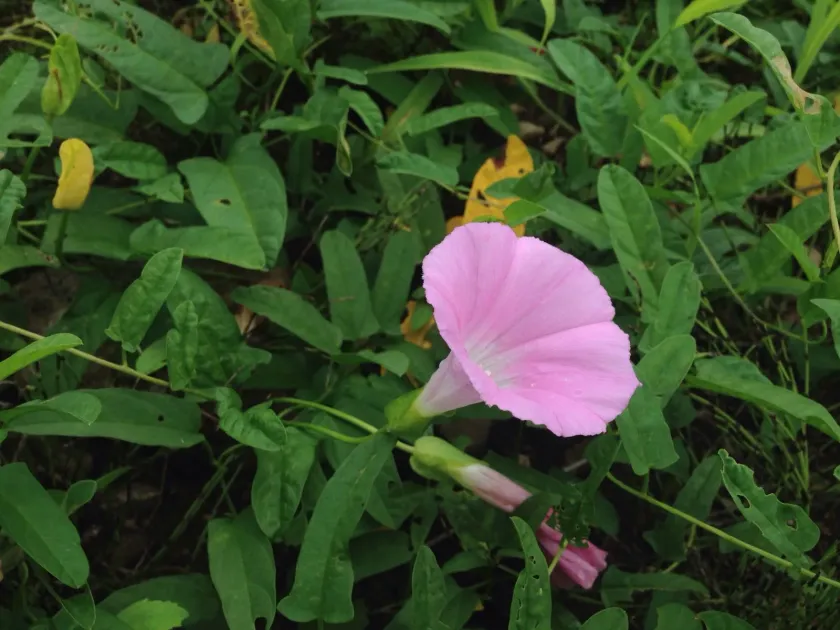
The stems are twining and flexible, capable of reaching significant lengths while climbing nearby crops or structures. The leaves are typically hastate or sagittate, with a distinctive fine pubescence on the surface that sets it apart from other species.
The flowers are large, funnel-shaped, and usually feature soft pink or white hues. They bloom during the day and are often visually appealing, which frequently leads to neglect by farmers until the infestation becomes severe.
Reproduction occurs primarily through rhizome fragments. Due to its high regenerative capacity, even small pieces of the root system left in the soil after tilling can successfully sprout and form new plants.
The plant demonstrates high adaptability, rapidly growing above ground to shade out competing vegetation. This biological strategy allows it to dominate the canopy layer and restrict light access for crops.
Where it grows
This weed prefers moist, nutrient-rich soils and is commonly found in riparian zones, alongside irrigation ditches, and within fertile agricultural lands. It thrives in loose, disturbed soil where it can easily expand its rhizome network.
It poses a significant threat to row crops, small grains, and horticultural plantings. Once established, it can spread rapidly across a field if mechanical cultivation is used without precise depth control.
Calystegia pubescens is frequently introduced to new fields through contaminated machinery or improper waste management. It is often seen along field edges and fence rows before infiltrating the main production area.
The plant is resilient to various environmental stressors and can survive in areas with inconsistent moisture. It uses deep roots to access water during dry spells, maintaining its growth advantage over less hardy crops.
Agroecosystems with intensive irrigation and high fertilization levels are particularly vulnerable, as the weed leverages the added inputs to fuel its aggressive vegetative expansion.
Harm it causes
The primary damage is caused by competition for resources and physical suppression. By climbing onto crops, the weed causes lodging, resulting in poor development and significant yield losses at harvest time.
The weed exerts high pressure on soil nutrients and moisture, effectively starving the cultivated plants. This competition reduces the biomass of the main crop and lowers the overall quality of the harvested product.
Mechanical harvesting becomes difficult and inefficient when Calystegia pubescens is present. Its twining stems can clog agricultural machinery, leading to increased fuel consumption, machine wear, and downtime.
As a host for various viruses and fungal pathogens, the weed increases the risk of plant diseases within the field. These pathogens can spread from the weed foliage to the crops, necessitating additional pesticide interventions.
In horticultural settings, heavy infestation can completely overwhelm small seedlings, leading to total crop failure and the high cost of manual weeding or replanting efforts.
How to control
Effective control requires a combination of cultural and chemical strategies. Deep plowing can help break up rhizome networks, but it must be followed by frequent cultivation to exhaust the roots of their stored energy.
Systemic herbicides, particularly those based on glyphosate, are effective when applied during the peak growth period. The systemic action ensures that the active ingredient moves to the roots, providing long-term suppression.
In cereal crops, selective herbicides such as 2,4-D or dicamba are standard tools. Timing is critical to ensure that the chemical is absorbed effectively while minimizing the risk of phytotoxicity to the main crop.
Integrated Weed Management (IWM) suggests using dense planting patterns to minimize the light available for the weed. Rotation with vigorous, tall-growing crops can also create shade that suppresses the bindweed's growth.
- Apply systemic herbicides post-harvest for better root control.
- Maintain equipment sanitation to prevent weed spread between fields.
- Use pre-emergent control measures in row crops.
- Monitor field boundaries to prevent encroachment into crop areas.
Taxonomy
- Latin name
- Calystegia pubescens
- Family
- Вьюнковые
- EPPO code
- CAGPU